When two conditions feed into each other, treating only one is rarely enough. Hypothyroidism and low iron are a textbook example; both amplify the other, and both are surprisingly common in the same patient. If you have been feeling drained despite eating well, or if your thyroid medication is not working as expected, your iron levels might be contributing to it. Understanding the link between hypothyroidism and low iron is the first step toward feeling genuinely better.
How Are Iron and Thyroid Health Connected?
Take the example of a college student, call her Meera, who was always tired, struggling to keep up with classes and her weekend sports routine. Blood tests flagged iron deficiency first. Months later, the same fatigue led her doctor to investigate further, and thyroid dysfunction was confirmed. Meera's story is not unusual.
Iron plays a direct biochemical role in thyroid function. The body relies on iron to produce T3 (triiodothyronine) and T4 (thyroxine). More importantly, iron is needed to convert the inactive T4 into the active T3 form that cells actually use. When iron stores are low, this conversion slows, thyroid hormone output drops, and metabolism becomes sluggish, even if the thyroid gland itself is structurally fine.
Research bears this out: nearly 45% of women with hypothyroidism also had low iron levels, particularly those with heavy menstrual periods or vegetarian diets. This overlap is not coincidental. Understanding the Causes of Hypothyroidism can help you identify whether nutritional deficiencies are contributing to your condition.
What Symptoms Do Hypothyroidism and Iron Deficiency Share?
This is where diagnosis gets complicated. Hypothyroidism and iron deficiency produce many of the same complaints, so one condition can mask the other for months.
Shared symptoms include:
- Persistent fatigue and low energy
- Pale or sallow skin
- Difficulty tolerating cold
- Brittle nails that chip or break
- Slow or thinning hair growth
- Shortness of breath with light activity
- Mood swings and low motivation
Because these symptoms overlap so heavily, a patient may be treated for one condition while the other continues unchecked. A thorough evaluation, including ferritin levels, serum iron, and a full thyroid panel, matters more than treating symptoms in isolation.
Reviewing the Symptoms of Hypothyroidism can help you cross-reference your experience and have a more informed conversation with your homeopathic doctor.
How Can You Manage Iron Deficiency When You Have a Thyroid Condition?
Managing hypothyroidism and low iron together requires a coordinated dietary and medical approach.
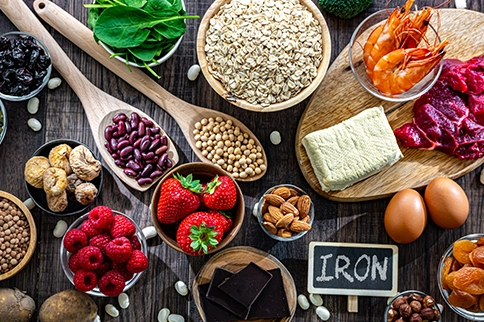
- Prioritise iron-rich foods: Include lentils, spinach, chickpeas, dates, and pumpkin seeds daily. Animal sources such as lean meat and eggs provide highly bioavailable iron, but plant sources work well when combined correctly.
- Pair iron with vitamin C: Vitamin C significantly improves absorption of plant-based iron. Squeeze lemon over your dal, eat a guava with an iron-rich meal, or have orange juice with your supplement.
- Avoid absorption blockers: Tea, coffee, calcium-rich foods, and antacids all inhibit iron absorption. Keep at least a two-hour gap between these and your iron intake.
- Time your thyroid medication carefully: Do not take iron supplements at the same time as thyroid hormone replacement. A four-hour gap prevents interference with the absorption of both.
- Track ferritin, not just haemoglobin:Ferritin reflects stored iron and drops before anaemia appears. Many patients feel iron-deficient while their haemoglobin reads normal. Regular ferritin testing gives a truer picture.
Diet adjustments alone may not be enough. For broader guidance, the Hypothyroidism Diet: Foods to Eat and Avoid guide covers what supports and what hinders thyroid health.
How Does Homeopathy Support Iron and Thyroid Health?
Homeopathy treats hypothyroidism and low iron not as two separate problems, but as interconnected disturbances in the body's overall balance. A homeopathic doctor evaluates the whole patient, constitution, lifestyle, stress, hormonal patterns, and nutritional status; before selecting a remedy.
This whole-person lens has practical advantages. Homeopathic treatment can improve nutrient absorption at the gut level, reduce the systemic inflammation that sometimes underlies both conditions, and support the body's own hormonal regulation over time. Rather than simply replacing what is missing, it addresses why the deficiency exists.
Patients often find that with consistent homeopathic care, iron supplementation becomes more effective, and thyroid medication (when used) works at lower doses. Side effects typical of conventional thyroid treatment, such as palpitations and dependency on synthetic hormones, are also avoided.
Dr Batra's® Pro Tip
If you take iron supplements alongside thyroid medication, always maintain a minimum four-hour gap between the two. Iron significantly reduces the absorption of thyroid hormone replacements, making your condition appear treatment-resistant when the real problem is a timing conflict.
How Does Homeopathy Compare to Conventional Treatment for Thyroid Disorders?
| Feature | Conventional Hypothyroidism Treatment | Homeopathic Approach |
| Core approach | Thyroid hormone replacement therapy | Individualised, holistic treatment approach |
| Primary focus | Manages TSH and hormone levels | Focuses on overall hormonal and systemic balance |
| Symptom management | Improves most symptoms but may not address all co-existing deficiencies | Aims to support multiple contributing factors, such as stress, digestion, and emotional health |
| Nutritional deficiencies | Iron, B12 or other deficiencies need separate management | Considered as part of the overall case evaluation |
| Personalisation | Standard dosage based on hormone levels | Highly individualised based on full health profile |
| Role in treatment | Mainline, lifelong management in most cases | Often used as supportive or complementary care alongside conventional treatment |
| Treatment perspective | Lab-value driven | Whole-person focused |
Why Choose Dr Batra's® for Hypothyroidism Treatment?
Our doctors provide structured, ongoing support for hypothyroidism management, focusing on steady improvement in thyroid function, metabolism, energy levels, and overall well-being. The approach is designed to ensure safe, monitored care with long-term stability through personalised attention at every stage.
1. Comprehensive clinical evaluation
The initial consultation includes a detailed 40–45-minute assessment to understand symptoms, medical history, lifestyle patterns, diet, sleep quality, stress levels, menstrual health, and family history. This helps identify the underlying factors contributing to thyroid imbalance beyond just lab reports.
2. Detailed diagnostic review
We evaluate key thyroid parameters, including TSH, T3, T4, thyroid antibodies, and related metabolic markers. Along with clinical symptoms, this helps in understanding the severity, progression, and type of hypothyroidism, including autoimmune conditions such as Hashimoto’s thyroiditis.
3. Individualised treatment plan
Based on clinical findings, a personalised care plan is designed that may include homeopathic support along with lifestyle and dietary guidance. The focus is on supporting hormonal balance, improving metabolism, reducing fatigue, and enhancing overall functional well-being.
4. Regular monitoring and follow-up
Treatment progress is closely monitored through periodic reviews and symptom tracking. Adjustments are made based on response to ensure consistent improvement, better symptom control, and long-term thyroid stability under guided supervision.
Conclusion
- Hypothyroidism and low iron often occur together and can influence each other, making symptoms more persistent and harder to manage.
- Addressing only one of these conditions may lead to incomplete improvement in overall health and energy levels.
- A combined approach that addresses both thyroid function and iron levels can support more effective, balanced outcomes.
- Nutritional correction alongside hormonal management is important for improving fatigue, metabolism, and overall well-being.
- Homeopathy takes a whole-body, individualised approach that considers both hormonal imbalance and nutritional status in treatment planning.
Frequently Asked Questions
- How Iron and Thyroid Health Are Connected
- Shared Symptoms of Hypothyroidism and Iron Deficiency
- How to Manage Iron Deficiency with a Thyroid Condition
- How Homeopathy Supports Iron and Thyroid Health
- Homeopathy vs. Conventional Treatment for Thyroid Disorders
- Why Choose Dr Batra’s for Hypothyroidism Treatment
- Conclusion
- FAQs
- References


More in Hair

Trending Now
Are thyroid and obesity related?
What are the first signs of menopause?
How Homeopathy Supports Natural Hormone
Get Your Personalised Health Treatment Today


Working hours: 10am to 9pm daily.
Have Enquiries?
Leave your details and our hair therapy specialist will respond to your query shortly.