
- 28+ Years of experience
- Dermatology,
- Hair Specialist,
- Oncology,
- Pediatrics,
- Skin Specialist
A 2023 study by the Indian Journal of Dermatology found that over 60% of psoriasis cases in India are initially misdiagnosed, emphasising the importance of early and accurate clinical evaluation. Psoriasis isn’t just about dry, flaky skin. It’s a chronic autoimmune condition that can impact your confidence, lifestyle, and mental well-being.
In India alone, studies have shown that around 2–3% of the population suffers from psoriasis, and the number is growing due to stress and sedentary lifestyles. The key to managing psoriasis is early recognition of symptoms and choosing the right treatment. This blog helps you understand the signs of psoriasis, including early symptoms and scalp-specific clues, so that you can take timely action.
What Is Psoriasis? Symptoms, Triggers & How to Manage It
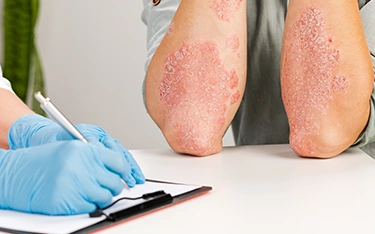
Psoriasis is an autoimmune disease where the immune system overreacts and attacks healthy skin cells, causing them to multiply rapidly. This leads to thick, red, scaly patches on the skin.
It’s not contagious, but it requires long-term management. In many cases, symptoms come and go in cycles triggered by stress, infections, or lifestyle factors.
Early Symptoms of Psoriasis
- Red bumps that evolve into scaly patches
- Itching, burning, and stinging sensation
- Dry, cracked skin that may bleed
- Stiff or inflamed skin around joints
According to a 2023 study by the Indian Journal of Dermatology, over 60% of psoriasis cases in India are misdiagnosed in the early stages—highlighting the need for timely clinical evaluation.
Psoriasis Symptoms by Body Area
Scalp Psoriasis Symptoms
Scalp psoriasis affects nearly 80% of Indian patients with psoriasis and is often misdiagnosed as dandruff.
Common signs:
- Silvery-white flakes
- Red, itchy patches
- Dryness and inflammation
- Hair thinning from scratching
Nail Psoriasis
- Pitting (tiny dents)
- Yellowish or crumbly nails
- Nail thickening
- Separation from the nail bed
- Often linked with psoriatic arthritis.
Elbows, Knees & Lower Back
- Thick, red plaques with silver scales
- Commonly found in plaque psoriasis
- Often painful and itchy during flare-ups
Facial Psoriasis
- Redness around eyebrows, nose, and hairline
- Skin may crack or peel
- Visibility often affects self-esteem
Genital Psoriasis
- Red, shiny lesions in sensitive areas
- Often mistaken for fungal infections
- Requires gentle, specialised care
Psoriasis vs. Other Skin Conditions
| Feature | Psoriasis | Other Skin Conditions (Eczema, Seborrheic Dermatitis, Fungal Infections) |
| Edges | Well-defined | Usually ill-defined |
| Scales | Silvery-white | Yellowish, greasy, or less prominent |
| Oozing | Minimal | Often more oozing or discharge |
| Nails | Frequently involved | Rarely involved |
When To See a Doctor: How Early You Should Have Psoriasis Symptoms Checked
Seek help if you experience:
- Persistent red, scaly patches – If patches remain for weeks and don’t improve with moisturisers or over-the-counter care, it may indicate psoriasis that needs professional treatment.
- Worsening symptoms despite home care – When creams, lifestyle changes, or natural remedies fail to control flare-ups, timely medical intervention is essential to prevent complications.
- Nail changes or joint stiffness – Signs like pitted nails, thickened nails, or stiffness in fingers and joints can signal psoriatic arthritis, which requires early diagnosis.
- Flare-ups during stress or weather changes – If symptoms frequently worsen with emotional stress, seasonal shifts, or cold weather, consulting a doctor helps in managing triggers effectively.
Timely diagnosis helps prevent complications, such as psoriatic arthritis.
Dr Batra’s® pro tip:
Early-stage psoriasis responds better to treatment. Don’t delay consulting a specialist if you see red or scaly patches.
Why Homeopathy Works Best for Psoriasis
- Treats root causes such as stress, hormones, or immune dysfunction
- Long-term solution without steroids or side effects
- Personalised to individual symptoms and triggers
- Safe for all age groups, including children
How Dr Batra’s® Can Help You in treating psoriasis
Dr Batra’s® offers holistic, evidence-based care for psoriasis, combining homeopathy, AI-driven diagnostics, and advanced treatments.
What sets us apart:
- Homeopathy customised to your case
- AI skin analysis for treatment tracking
- Advanced hair treatments like groHair and aesthetic treatments like Derma Heal for skin repair. Dr Batra’s® DermaHeal offers natural, non-invasive skin repair for acne scars, pigmentation, psoriasis, and more. Powered by homeopathy and advanced technology, it boosts collagen and restores skin health—without steroids or side effects.
- Supportive guidance on food, stress, and lifestyle
Whether you're focusing on diet or trying vitamin D supplements, we help you integrate everything for long-term results.
Top Celebrities Trust Homeopathy!
Listen and get inspired by what these top celebrities have to say about Dr Batra’s® and their belief in homeopathy

Get Long-Lasting Relief with Homeopathy
Book an AppointmentConclusion
- Psoriasis comes in various forms, each requiring unique care
- Triggers include stress, infections, genetics, and medications
- Homeopathy offers a safe and effective approach to managing psoriasis
- Dr Batra’s® provides expert psoriasis treatments tailored to individual needs
If you are struggling with psoriasis, consult Dr Batra’s® today for a personalised treatment plan.
Frequently Asked Questions
- What Is Psoriasis? Symptoms, Triggers & How to Manage I
- Early Symptoms of Psoriasis
- Psoriasis Symptoms by Body Area
- Psoriasis vs. Other Skin Conditions
- When To See a Doctor: How Early You Should Have Psoriasis Symptoms Checked
- Why Homeopathy Works Best for Psoriasis
- How Dr Batra’s® Can Help You in treating psoriasis
- FAQs


More in Hair
Trending Now
How to Reduce Acne Scars Naturally and Effectively
10 most common skin disorders
Remedy for itchy skin at night
Get Your Personalised Health Treatment Today


Working hours: 10am to 9pm daily.
Have Enquiries?
Leave your details and our hair therapy specialist will respond to your query shortly.