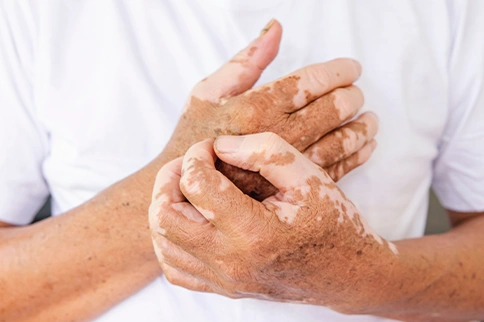
That stubborn rash or white patch on your skin — is it lichen planus or vitiligo? Understanding the difference between lichen planus and vitiligo is the first step toward the right treatment. Lichen Planus is a chronic inflammatory condition that causes swollen, itchy and purplish flat-topped bumps on the skin and painful sores in the mouth or genitals.
On the other hand, vitiligo is an autoimmune disorder in which the immune system destroys the pigment-producing cells, leaving smooth white patches on the skin with no pain or itching but a deep psychosocial impact. In this blog, we will walk you through everything you need to know, including what these two conditions are, how to tell them apart, how they are diagnosed, the best conventional and homeopathic treatment approaches, and when to seek medical advice.
What Causes Lichen Planus and Vitiligo?
Lichen planus and vitiligo are chronic, non-contagious immune-mediated conditions caused by the body’s immune system attacking healthy skin cells.While lichen planus involves an immune-mediated inflammatory response targeting the skin and mucosal tissues, vitiligo is driven by the immune system's destruction of melanocytes.
Lichen Planus
Lichen Planus is an inflammatory condition that affects the skin, scalp, nails, and mucous membranes.
- Genetics: Individuals with a family history or specific genetic makeup may have an increased risk of developing the condition.
- Immune response: Cytotoxic T lymphocytes target and destroy basal keratinocytes.
- Triggers: Viral infections, allergic reactions to certain medications, and physical stress can trigger the disease.
Vitiligo
This is a skin disorder that causes distinct white patches to form on the skin due to a loss of melanin (the skin pigment).
- Immune Response: The immune cells mistakenly attack and destroy the melanocytes, the pigment-producing cells that are responsible for skin colour.
- Triggers: Environmental factors, including emotional stress, sunburns and exposure to industrial chemicals, are capable of triggering the immune response in genetically susceptible individuals.
- Genetics: Approximately 20% of people with vitiligo have a family history of the condition, and scientists have identified over 30 genes associated with this condition.
Lichen Planus vs Vitiligo: Key Differences at a Glance
While both are immune-mediated, the lichen planus vs vitiligo difference is most evident in their appearance, symptoms, and mechanism:
- Primary cause: Lichen Planus is a chronic inflammatory condition where the immune system targets the basal layer of the skin and mucous membranes. Meanwhile, vitiligo occurs when the immune system attacks and destroys the melanocytes, the pigment-producing cells.
- Appearance: Lichen Planus shows flat-topped, polygonal, purplish, itchy bumps with white lines on the surface known as Wickham’s striae. Meanwhile, Vitiligo appears as smooth, flat, smooth, depigmented white patches with no change in skin texture.
- Symptoms: Lichen Planus is very itchy and can lead to significant physical and psychological distress. Vitiligo is usually asymptomatic, although some patients may experience mild itching before depigmentation develops.
- Diagnosis: Lichen Planus is diagnosed through physical examination of the characteristic 5 Ps of the rash or confirmed by skin biopsy. Meanwhile, Vitiligo is usually diagnosed through clinical examination and may be supported by Wood's lamp examination.
How Each Condition Affects the Skin Differently?
Both conditions are chronic immune-mediated disorders, but they affect the skin differently.
| Feature | Vitiligo | Lichen Planus |
|---|---|---|
| Mechanism | Immune system destroys melanocytes, the cells responsible for skin colour | Abnormal T-cell response triggers chronic inflammation targeting the basal layer of skin |
| Visual Appearance | Smooth, stark white depigmented patches, highly pronounced in darker skin tones | Clusters of flat-topped, shiny purplish-red papules with lacy white Wickham striae on the surface |
| Physical Sensation | Affected skin feels normal but is more susceptible to sunburn due to the absence of protective pigment. | Severe, unrelenting itching is the primary hallmark |
Atypical Variants- When they Overlap
Both conditions share immune pathways and can overlap:
- Lichen Planus Pigmentosus (LPP): This variant is more common in South Asian populations and presents as ashy-blue to dark brown patches on sun-exposed areas, including the neck and face.
- Colocalisation: In rare cases, lichen planus lesions can develop directly on the top of the existing vitiligo patches. It causes a combination of depigmentation and localised inflammation in the same area.
Can Lichen Planus and Vitiligo Look Similar?
Both conditions look very different. However, a specific variant called Lichen Planus Pigmentosus (LPP) can lead to confusion. Here’s the breakdown:
| Feature | Vitiligo | Classic Lichen Planus | Lichen Planus Pigmentosus (LPP) |
|---|---|---|---|
| Color | Chalky white or completely depigmented | Violaceous (purplish-red) | Ashy-grey or dark brown |
| Texture | Smooth and flat | Raised, flat-topped bumps; sometimes scaly | Flat macules resembling freckles or discolouration |
| Itchiness | Usually non-itchy | Intensely itchy | Mildly itchy to non-itchy |
| Location | Face, hands, joints, body folds | Wrists, ankles, lower back, inner mouth | Sun-exposed areas — face, neck, and arms |
How Are They Diagnosed?
The doctor makes a diagnosis for both conditions through a combination of physical examination and specialised testing:
- Visual and clinical evaluation: Vitiligo is diagnosed by checking for milky-white depigmented patches. Meanwhile, Lichen Planus is identified by the characteristic 5 P's: pruritic, purple, polygonal, planar papules.
- Wood’s Lamp Examination: Under this safe UV light, vitiligo patches glow a bright blue-white, exhibiting total melanin loss. Wood's Lamp is not useful for lichen planus, as it does not involve pigment loss.
- Skin Biopsy: Biopsy helps in confirming the diagnosis. Vitiligo biopsy shows complete absence of melanocytes, and a lichen planus biopsy shows characteristic band-like inflammation and damage to the basal layer of the skin
- Blood & Associated Tests: For vitiligo, blood tests are run to check for any underlying autoimmune conditions such as thyroid disorders. Meanwhile, for lichen planus, in selected cases, physicians may investigate associated conditions, including hepatitis C infection or potential medication-related triggers.
Treating Lichen Planus and Vitiligo: Conventional and Homeopathic Approaches
A quick comparison of homeopathy and conventional approaches to help you understand how each aims to manage the condition
| Homeopathy | Conventional |
|---|---|
| Focuses on the individual and underlying susceptibilities | Focuses on managing symptoms and controlling disease progression. |
| Uses personalised remedies based on symptom patterns. | Uses medications, topical treatments, phototherapy, or other medical interventions. |
| Aims to support overall health and long-term balance. | Primarily targets visible skin symptoms and inflammation. |
| Treatment plans are individualised to each person's needs. | Treatment protocols are generally based on the diagnosis and severity of the condition. |
| Emphasises a holistic approach to care. | Emphasises evidence-based medical management of the condition. |
Can these conditions be cured or only managed?
Neither condition is curable, but both are manageable. Lichen planus treatment typically involves topical corticosteroids, immunosuppressive medicines, and phototherapy. Cutaneous lichen planus often resolves within 1-2 years, while oral and genital forms may persist longer and require ongoing management. For vitiligo, topical corticosteroids, calcineurin inhibitors, and other dermatologist-prescribed therapies are commonly used. Vitiligo treatment in homeopathy at Dr Batra's® focuses on individualised care to manage symptoms, support well-being, and address each patient's unique health profile.
When should you see a doctor?
Although neither of these conditions is life-threatening, early intervention helps confirm the diagnosis, prevent complications, and begin treatment as soon as possible.
When to see a doctor for lichen planus?
Lichen Planus is an inflammatory condition that can affect the nails, skin, scalp and mucous membranes. See a doctor if you experience the following:
- Mouth or genital sores
- Rash that becomes red, warm and swollen
- Persistent rashes like blisters on wrists, ankles and forearms or reddish purple bumps.
- Rapidly changing or thinning hair or deformed and thickening nails
When to see a doctor for Vitiligo?
You can schedule a consultation if:
- Notice white patches that are growing or spreading to new areas of the body.
- Discolouration affects your scalp, face and lips
- Notice changes in the colour of your hair, eyelashes, inside of the mouth and eyebrows
- The condition is impacting your daily activities, self-confidence and mental well-being.
Conclusion
- Both lichen planus and vitiligo are chronic, non-contagious immune-mediated conditions, distinct in appearance and mechanism, yet equally affecting quality of life. Knowing the difference between lichen planus and vitiligo is key to seeking the right care.
- Accurate diagnosis is essential, as the two can be confused with variants like Lichen Planus Pigmentosus
- Neither is curable, but both respond well to timely treatment. Homeopathy may be used as a complementary, individualised approach alongside conventional dermatological care.
- If you are in doubt, see a doctor early for a better outcome and timely treatment.
Frequently Asked Questions
- What Causes Lichen Planus and Vitiligo?
- Lichen Planus vs Vitiligo: Key Differences at a Glance
- How Each Condition Affects the Skin Differently?
- Can Lichen Planus and Vitiligo Look Similar?
- How Are They Diagnosed?
- Can these conditions be cured or only managed?
- When should you see a doctor?
- When to see a doctor for lichen planus?
- When to see a doctor for Vitiligo?


Get Your Personalised Health Treatment Today


Working hours: 10am to 9pm daily.
Have Enquiries?
Leave your details and our hair therapy specialist will respond to your query shortly.