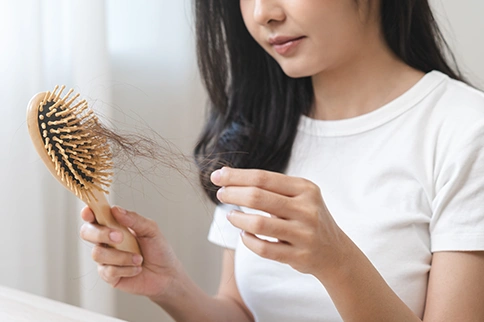
We think monsoons bring relief from the heat, but for your hair, it is anything but refreshing. Damp scalp, humidity, nutritional gaps, and fungal build-up all peak during the rainy season, making monsoon one of the worst times of the year for your hair health. Hair fall in the monsoon is due to increased scalp shedding from high humidity, which fosters dandruff and bacteria, and acidic rainwater, which weakens and damages hair shafts. Dermatological studies suggest that, to combat seasonal damage, it is essential to keep the scalp clean, use a mild shampoo, and ensure adequate nutrition. In this blog, we will understand the reasons why you lose more hair during the monsoon and what you can do about it.
Why Does the Monsoon Season Trigger More Hair Fall?
- Weakened strands and high humidity
The humid air causes the hair shaft to absorb excess moisture, swelling and weakening the cuticle layer. Weakened hair breaks and snaps more easily, contributing to visible hair fall. - Polluted rainwater
Urban rainwater carries atmospheric pollutants, making it mildly acidic. This disrupts the scalp’s natural pH balance and damages the hair shaft over time. - Clogged hair roots
Excess sweat mixes with scalp oils and dead skin cells, creating a thick buildup. The clogged follicles are starved of nutrients and oxygen, which weakens the hair roots. - Nutritional deficiencies
Reduced sunlight during the monsoon season lowers vitamin D levels, disrupting healthy hair follicle cycling. Seasonal dietary changes lead to a drop in iron, zinc, and protein intake, which are critical for hair growth. - Dandruff and fungal infections
The warm, damp climate creates a breeding ground for microbes like Malassezia, a fungus that causes dandruff. This leads to severe itching, scalp inflammation, and scratching that weaken the hair roots and increase shedding.
When Does Monsoon Hair Loss Start, and How Long Does It Last?
The timing of hair loss depends entirely on the cause. Here is the detailed information:
Temporary hair loss (Telogen Effluvium)
When it starts:2–3 months after a major physical or emotional stress
How long does it last? Shedding lasts 3–6 months. After the cause is resolved, the hair returns to its normal volume and thickness within 6–12 months.
Monsoon-Triggered Dandruff-Related Shedding:
When it starts: Within 2–4 weeks of monsoon onset.
How long does it last? - Resolves in 4–6 weeks with proper scalp care and antifungal treatment.
Seasonal Hair Loss
According to Dr Batra's® clinical resources, citing research by Ducray Dermatological Laboratories, seasonal hair loss is a temporary, reversible form of hair shedding that lasts less than 6 months. Early signs of regrowth are usually seen within 3 to 6 months, although in some individuals it may take 12 to 18 months for hair to regain its previous density and appearance fully.
Signs Your Hair Loss Is Monsoon-Related
The most common signs of hair loss during the monsoon associated with the rainy season include:
- Increased shedding: Noticeably more hair on the brush or pillow than usual
- 2. Oily scalp: Humidity leads to excess sebum and clogged follicles
- Scalp issues: Sudden itching, dandruff, and irritation
- Hair breakage: Short and snapped strands from fragility and styling stress
- Frizzy and weak hair: Moisture leads to dullness and breakage.
When Is Hair Loss Normal and When Is It Concerning?
Not every hair fall is a cause for concern. The key is to understand the difference between your hair’s natural shedding cycle and the hair loss that needs attention.
Normal Hair Shedding Vs Hair Loss
Studies have shown that normal hair shedding is about 50-100 strands per day (sometimes up to 150). This is part of the natural hair growth cycle, in which lost hair is replaced by new growth. Hair loss occurs when the shedding increases and regrowth slows. This leads to visible thinning and bald patches.
Warning Signs
- Visible thinning, bald patches, or widening part
- Excess shedding on pillow, brush, and drain
- Pull test — more than 10 strands in one gentle tug
- Receding hairline or reduced ponytail volume
Common Triggers: Recent illness, surgery, or major weight loss; physical or emotional stress; postpartum changes; stopping birth control; iron, protein, or zinc deficiency
How to Manage Monsoon Hair Loss at Home?
Managing monsoon hair fall starts with one principle: keep your scalp clean, dry and nourished. Here's how:
- Wash after rain: Rinse off the acidic rainwater immediately with a mild, sulphate-free shampoo to prevent fungal build-up.
- Skip hot water: Wash hair with lukewarm water or cool water to reduce breakage and seal the cuticle.
- Do not tie wet hair: Damp hair is fragile. Let it dry or use a cool dryer setting before styling.
- Detangle carefully: Use a wide-toothed comb on wet hair.
- Avoid heat styling: Humidity stresses your strands. The heat tools only add to the damage.
- Warm oil massage: Apply any oil (almond, coconut, or rosemary) 30 minutes before washing. This will help strengthen roots and boost circulation.
How to support hair during seasonal shedding?
Maintaining hair health during seasonal changes requires proper nutrition and gentle hair care habits.
- Choose mild and scalp-friendly hair products
- Do not tie your braids, buns and ponytails
- Ensure adequate intake of key hair-supporting nutrients
When Does Monsoon Hair Fall Need Medical Attention?
Excessive hair fall during the monsoon, with visible changes in scalp or hair pattern, indicates an underlying issue that needs attention. Among the factors are:
- High shedding: 200–300+ hairs daily for weeks
- No recovery: Hair fall continues beyond 2–3 weeks post monsoon.
- Scalp issues: Redness, itching, pain or pus bumps
- Pattern changes: Widening part or bald patches
Treatment Options for Seasonal Hair Loss
Managing seasonal hair shedding involves opting for a balanced diet, gentle care, and advanced scalp treatments to support healthy hair growth. Those experiencing persistent hair loss during the monsoon should consider the following:
Key factors include:
- Scalp support: Massage regularly to improve circulation
- Gentle care: Avoid heat and tight styles. Use a mild shampoo
- Nutrition: Adequate protein, zinc, iron and vitamins
- Support: Include supplements only if the deficiencies are confirmed
- Advanced treatments: Opt for advanced treatments like groHair, XOGEN and XOGEN Advance, for faster hair regrowth and improved scalp health
- Homeopathy hair loss treatment: Personalised homeopathic treatment addresses the root cause of hair loss, strengthening follicles, reducing scalp inflammation and regulating the hair growth cycle. Safe, natural with no side-effects.
Conclusion
- Monsoon hair loss is triggered by humidity, nutritional gaps and fungal buildup
- Seasonal shedding is temporary and resolves within 3–6 months with consistent care A balanced diet, a clean scalp and a gentle routine help in managing hair fall
- Patterned and persistent hair loss needs immediate medical attention. Do not wait for too long.
- Advanced treatments are available for cases that go beyond seasonal shedding
Frequently Asked Questions
- Why Does the Monsoon Season Trigger More Hair Fall?
- When Does Monsoon Hair Loss Start, and How Long Does It Last?
- Signs Your Hair Loss Is Monsoon-Related
- When Is Hair Loss Normal and When Is It Concerning?
- How to Manage Monsoon Hair Loss at Home?
- How to support hair during seasonal shedding?
- When Does Monsoon Hair Fall Need Medical Attention?
- Treatment Options for Seasonal Hair Loss


Get Your Personalised Health Treatment Today


Working hours: 10am to 9pm daily.
Have Enquiries?
Leave your details and our hair therapy specialist will respond to your query shortly.