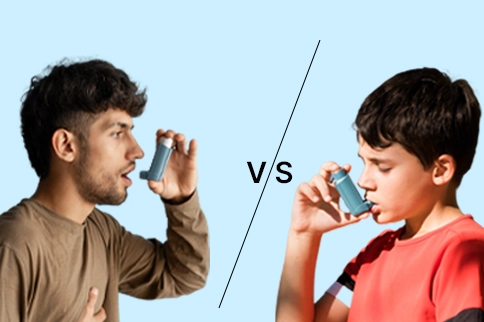
Understanding the difference between childhood asthma and adult-onset asthma matters more than most people realise. The age at which asthma begins shapes its triggers, symptoms, and response to treatment. In India, childhood asthma prevalence ranges from 7.6% to 9.1%, while adult asthma affects nearly 2.05% of the population, with urban numbers running higher. Whether you are a parent managing a child's recurring wheeze or an adult newly struggling to breathe, knowing these differences is the first step toward effective care.
What is Adult-Onset Asthma?
When exploring childhood asthma vs adult-onset asthma, the first distinction is timing. Asthma appearing after age 18 is classified as adult-onset. Many adults mistake early symptoms for bronchitis or seasonal allergies, delaying diagnosis. Unlike childhood asthma, which often announces itself with obvious wheezing, adult-onset asthma creeps in gradually. Breathlessness may begin only during exertion, then become a daily reality. Because the immune system is already fully developed, adults respond differently to triggers and are far less likely to outgrow the condition.
What Causes Adult-Onset Asthma?
Childhood asthma is rooted in genetic vulnerability and early environmental exposure. A family history of asthma, eczema, or allergic rhinitis significantly raises a child's risk. Early and repeated respiratory viral infections can permanently alter airway behaviour. Indoor air quality plays a critical role; tobacco smoke, mould, pet dander, and dust mites are common household culprits. Research confirms a well-documented connection between dust mite allergens and childhood asthma . Weak immune development in early childhood further increases susceptibility to allergen sensitisation.
What Causes Childhood Asthma?
Childhood asthma is rooted in genetic vulnerability and early environmental exposure. A family history of asthma, eczema, or allergic rhinitis raises a child's risk significantly. Early and repeated respiratory viral infections can permanently alter airway behaviour. Indoor air quality plays a critical role; tobacco smoke, mould, pet dander, and dust mites are common household culprits. Research confirms a well-documented connection between Dust Mite Allergens and Childhood Asthma. Weak immune development in early childhood further increases susceptibility to allergen sensitisation.
Childhood Asthma vs Adult Onset Asthma: A Quick Comparison
| Aspect | Childhood Asthma | Adult-Onset Asthma |
| Age of Onset | Infancy to adolescence | After age 18 |
| Common Triggers | Viral infections, allergens, and exercise | Pollution, hormonal changes, stress, and obesity |
| Diagnosis | Usually identified early | Frequently misdiagnosed or diagnosed late |
| Remission | Many children outgrow it | Rarely goes into remission on its own |
| Symptoms | Wheezing, cough, activity-related breathlessness | Persistent breathlessness, chest tightness, progressive worsening |
| Treatment Response | Inhalers and nebulisers are often effective | Often requires comprehensive, long-term management |
The table makes clear that the two conditions behave differently and demand different strategies.
How to Manage Childhood Asthma
Managing a child's asthma requires consistency. Identifying specific triggers, such as cold air, pet hair, or certain foods, and minimising exposure is the first step. Keeping the home free of dust, mould, and tobacco smoke is non-negotiable. Safe physical activity strengthens lung capacity, and antioxidant-rich nutrition supports immune development. Consistent sleep reduces inflammation. A qualified homeopathic doctor builds the child's immune resilience gradually, avoiding long-term dependence on symptom-suppressing medicines.
How to Manage Asthma at Any Age
Certain principles apply regardless of when asthma began. Avoiding known triggers is non-negotiable. Maintaining a healthy weight reduces inflammatory load and eases respiratory pressure. Breathing exercises, yoga, and pranayama, especially, improve lung function and reduce the frequency of attacks. Staying hydrated helps keep airways less reactive, and a whole-food diet broadly supports respiratory health. For adults, managing stress is particularly important given its direct link to flare-ups. Practical home care strategies for asthma complement formal treatment well.
Dr Batra's® Pro Tip
Keep a weekly trigger diary. Note the weather, foods, stress levels, and activity on symptom days. Patterns typically emerge within a month, giving your homeopathic doctor precise data to personalise treatment.
Childhood Asthma vs Adult Onset Asthma: Homeopathy vs Conventional Treatment
Comparing treatment approaches reveals where each falls short and where it excels.
Homeopathy (Dr Batra's® approach):
- Addresses root causes, not just acute symptoms
- Safe for children and adults, with no steroid dependence
- Personalised to age, triggers, and overall health profile
- Supports long-term relief and immune strengthening
Conventional treatment:
- Manages symptoms during flare-ups but does not resolve underlying immune dysfunction
- Relies heavily on corticosteroids, with side effects during prolonged use
- Offers limited personalisation and no root-cause resolution
For children, the absence of side effects is particularly reassuring for parents. For adults on long-term inhalers, homeopathy addresses what drives the condition rather than suppressing its signals.
Homeopathy for Bronchial Asthma — A Natural Approach
Homeopathy focuses on strengthening the body’s internal balance so that asthma episodes become less frequent, less intense, and easier to manage over time.
How it helps:
- Individualised treatment – Remedies are selected based on your symptom pattern, triggers, emotional state, and overall health.
- Reduces airway hypersensitivity – Aims to calm the immune overreaction that causes recurrent wheezing and breathlessness.
- Supports long-term control – Reduces flare-up frequency and intensity gradually.
- Gentle and non-sedative – Does not cause drowsiness or interfere with daily functioning.
- Suitable for all age groups – Can be used in children and adults under qualified supervision.
- Complements conventional care – Can be integrated alongside prescribed inhalers with medical guidance.
How Dr Batra's® Helps Manage Childhood and Adult- Onset Asthma
At Dr Batra’s®, childhood asthma and adult-onset asthma are managed through a personalised, root-cause-focused approach. The treatment plan considers age, trigger patterns, immune response, and overall health to support long-term respiratory stability.
- Comprehensive Assessment
Detailed evaluation of symptom history, age of onset, frequency of attacks, family history, lifestyle factors, and environmental exposures. - Trigger Pattern Analysis
Identification of common triggers such as allergens, infections, pollution, stress, hormonal influences, or occupational exposure to understand what drives flare-ups. - Personalised Homeopathic Treatment
Individually selected remedies aimed at reducing airway hypersensitivity, strengthening immune balance, and lowering recurrence over time. - Regular Monitoring and Support
Consistent follow-ups to assess response, refine treatment when needed, and ensure steady improvement in breathing comfort and overall quality of life.
Disclaimer: Self-medication is strongly discouraged. Homeopathic medicines should be taken only under the guidance of a qualified medical practitioner. Remedies are prescribed based on individual symptoms, medical history, and overall health, and may vary from person to person. Results may vary depending on the severity of the condition and individual response to treatment.
Conclusion
- Childhood asthma and adult-onset asthma differ in causes, progression, and long-term outlook.
- Early recognition of these differences helps avoid misdiagnosis and incomplete treatment.
- Adult-onset asthma is often more persistent and may require a more comprehensive care plan.
- Understanding trigger patterns is key to choosing the right management strategy.
- Homeopathy focuses on the individual and on the underlying immune imbalance rather than on symptom control alone.
- With guided treatment, asthma can be managed safely and sustainably at any age.
Frequently Asked Questions
- What Is Adult-Onset Asthma?
- Causes of Adult-Onset Asthma
- Causes of Childhood Asthma
- Childhood Asthma vs Adult-Onset Asthma: Key Differences
- Managing Childhood Asthma
- Managing Asthma at Any Age
- Homeopathy vs Conventional Treatment in Asthma
- Homeopathy for Bronchial Asthma
- How Dr Batra’s® Helps Manage Asthma
- Conclusion
- FAQs
- References


More in Hair


Trending Now
Just Naughty or ADHD?
Easily Distracted? Here are a few tips to cope with ADHD symptoms
5 Tips to communicate with ADHD children
Get Your Personalised Health Treatment Today


Working hours: 10am to 9pm daily.
Have Enquiries?
Leave your details and our hair therapy specialist will respond to your query shortly.