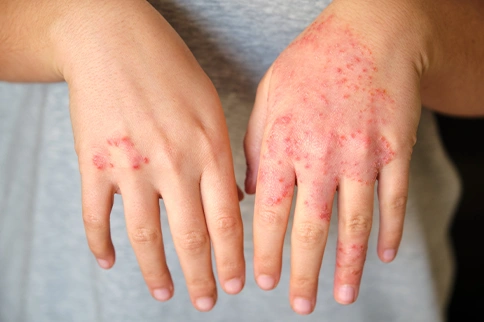
“You scratch it once. Then again. Then you catch yourself checking: Is it spreading?”
Maybe it started as one patch you could hide under a sleeve. But now it's showing up on your elbows, your scalp, maybe even your nails. And no matter how many creams you have tried, it keeps coming back - sometimes worse than before.
Does this sound familiar to you?
If you have been quietly wondering whether your psoriasis is spiralling out of control, you are not imagining it. Psoriasis isn't just "dry skin that flares up sometimes." It's a chronic condition that can genuinely get harder to manage if the root cause is never addressed - only the surface.
But there's good news to it. There's a lot you can actually do about it, once you understand what's really going on. Let's break it down in plain, simple language, with zero complications.
What Is Psoriasis?
Psoriasis is a chronic autoimmune condition. In simple terms, your immune system starts working overtime - telling your skin cells to grow much faster than they normally would.
Instead of shedding every 28-30 days like normal skin, psoriasis-affected skin cells pile up every 3-4 days. That build-up creates the thick, scaly, often red or silvery patches you see on the surface of your skin.
Here's the part most people don't realise: psoriasis isn't just a skin condition. It's an internal, immune-driven process - the skin is simply where it shows up.
Types of Psoriasis
Not all psoriasis looks - or behaves - the same way. Knowing which type of psoriasis you are dealing with can make a real difference to how it's managed.
- Plaque psoriasis - the most common type, showing up as raised, red patches topped with silvery-white scale, usually on the elbows, knees, scalp, and lower back.
- Guttate psoriasis - small, drop-shaped spots that often appear suddenly, sometimes triggered by a throat infection.
- Inverse psoriasis - smooth, shiny, red patches that develop in skin folds - underarms, groin, under the breasts - without the usual scaling.
- Pustular psoriasis - white, pus-filled blisters surrounded by red skin, most often on the hands and feet.
- Erythrodermic psoriasis - a rare but serious type that can cover large areas of the body with a red, peeling rash and needs urgent medical attention.
- Psoriatic arthritis - not a skin type on its own, but a related condition where psoriasis also affects the joints, causing pain, stiffness, and swelling.
If you are not sure which type you have, that's completely normal - it's exactly the kind of thing a proper skin assessment is meant to clarify.
Psoriasis Symptoms: How to Recognise It
Psoriasis doesn't look the same for everyone, but a few common psoriasis symptoms to watch for include:
- Red or discoloured patches of skin, often with a silvery-white scale on top
- Dry, cracked skin that may bleed
- Itching, burning, or soreness around the patches
- Thickened, ridged, or pitted nails
- Stiff or swollen joints (in some cases, this can signal psoriatic arthritis)
- Patches that tend to appear on the scalp, elbows, knees, or lower back - though they can show up almost anywhere
If you have noticed a few of these together, especially if they keep returning, it's worth understanding why.
What Causes Psoriasis?
There isn't one single trigger behind psoriasis- it's usually a mix of factors working together:
Genetics. If a parent or sibling has psoriasis, your own risk goes up. It doesn't guarantee you will develop it, but it does load the dice.
An overactive immune system. As mentioned, the real driver is immune cells mistakenly triggering rapid skin cell production.
Environmental and lifestyle factors. Stress, infections, certain medications, and even weather changes can switch a "dormant" tendency into an active flare.
Knowing your own pattern - what tends to set things off for you - is usually the first real step toward getting ahead of it, rather than constantly reacting to it.
Common Psoriasis Triggers
This is where many people find the most useful clues, because triggers are often things you can observe and manage. Some of the most common psoriasis triggers include:
- High stress levels or emotional strain
- Skin injuries - cuts, burns, or even a bad sunburn
- Infections, especially throat infections
- Cold, dry weather
- Smoking and alcohol consumption
- Certain medications (like some blood pressure or lithium-based drugs)
- Hormonal changes
Not every trigger applies to every person. Two people with psoriasis can have completely different flare patterns - which is exactly why a universal approach rarely works long-term.
Is Psoriasis Contagious?
Here's some reassurance worth spreading: no, psoriasis is not contagious. You cannot catch it from someone else's skin, and you cannot pass it on through touch, sharing towels, swimming in the same pool, or any other kind of everyday contact.
Psoriasis comes from the inside - an immune system response - not from a virus, bacteria, or fungus. The confusion often comes from how the patches look, since they can resemble other contagious skin conditions. But psoriasis itself simply isn't one of them.
5 Things That Can Help Control Psoriasis
If you have been searching for how to control psoriasis before it feels unpredictable again, these five things can genuinely make a difference:
- Track your flares like a pattern, not a mystery. Keep a simple note of when flares happen - what you ate, your stress levels, the weather, any new products you used. Patterns usually reveal themselves within a few weeks.
- Moisturise consistently, not just during a flare. Well-hydrated skin is more resilient. A thick, fragrance-free moisturiser applied right after a bath locks in moisture far better than reactive treatment during a flare-up.
- Manage stress actively, not passively. Since stress is one of the most common psoriasis triggers, even small daily habits - short walks, breathing exercises, consistent sleep - can reduce flare frequency over time.
- Be mindful of your skin barrier. Avoid harsh soaps, very hot showers, and rough scrubbing. Your skin barrier is already under strain during psoriasis - protecting it helps rather than hinders recovery.
- Don't just treat the visible patch - treat the root cause. This is the one most people miss. Creams and ointments can calm a flare temporarily, but since psoriasis originates in immune dysfunction, lasting control usually means addressing what's driving the immune response in the first place.
Psoriasis Treatment Options
Broadly speaking, psoriasis treatment options fall into a few categories, and most treatment plans use more than one together:
- Topical treatments - creams and ointments applied directly to patches to reduce inflammation, itching, and scaling
- Phototherapy - controlled exposure to UV light to slow down excess skin cell turnover
- Systemic treatments - oral or injectable options used for more severe or widespread psoriasis
- Lifestyle and trigger management - identifying and reducing personal triggers alongside any treatment
- Holistic and root-cause approaches - such as homeopathic psoriasis skin treatment, which looks at the underlying immune response rather than only the visible symptoms
The right combination depends on the type of psoriasis, its severity, and what's been triggering your specific flares.
Psoriasis Treatment in India: What's Available
If you are exploring psoriasis treatment in India, you will generally come across a mix of conventional and alternative approaches, often used alongside each other:
- Dermatology clinics offering topical, phototherapy, and systemic treatment
- Government and private hospitals with dedicated dermatology and psoriasis care units
- Homeopathic clinics offering a personalised, root-cause focused psoriasis skin treatment
- Wellness and lifestyle-based support, including stress management and dietary guidance
India also has a growing number of specialists experienced specifically in chronic, recurring skin conditions like psoriasis - which matters, since long-term management usually works better with continuity of care rather than one-off consultations.
When Should You See a Doctor?
A few flare-ups now and then always need a clinic attention.
- Patches are spreading quickly or covering larger areas of your body
- Your skin is cracking, bleeding, or showing signs of infection
- Joints feel stiff, swollen, or painful alongside your skin symptoms
- Flares are affecting your sleep, confidence, or daily routine
- Over-the-counter creams aren't making a noticeable difference after a few weeks
- You have never had a proper diagnosis and are simply assuming it's psoriasis
Getting an accurate diagnosis matters because a few other skin conditions can look similar - and treating the wrong one rarely helps.
Expert Care at Dr Batra's®
At Dr Batra's®, we understand that no two psoriasis journeys look the same. What triggers a flare for one person may be completely irrelevant for another - which is why we don't believe in a generic, universal treatment plan.
That's why we start by understanding you - not just your symptoms.
Our approach at Dr Batra's includes:
- A detailed look at your history, lifestyle, and possible triggers
- Personalised homeopathic care aimed at the root cause, not just the surface-level patches
- Practical lifestyle and skincare guidance alongside treatment
- Ongoing, judgement-free support through your treatment journey
With decades of clinical experience and a strong track record treating psoriasis patients across India and globally, Dr Batra® blends personalised homeopathic care with a genuinely human approach to skin health.
Conclusion
We wouldn't ignore a wound that keeps reopening every few weeks. So why let psoriasis flare up again and again without ever addressing what's actually causing it?
Psoriasis isn't just something to "manage" with creams forever - it's a signal that your immune system needs real, personalised attention. Understanding your triggers, protecting your skin, and treating the root cause can be the difference between constantly reacting to flares and actually getting ahead of them.
If your psoriasis feels like it's spiralling, don't wait it out. Talk to the experts at Dr Batra's® for a personalised assessment, and take the first step toward calmer, healthier skin.
Frequently Asked Questions
- What Is Psoriasis?
- Types of Psoriasis
- Psoriasis Symptoms: How to Recognise It
- What Causes Psoriasis?
- Common Psoriasis Triggers
- Is Psoriasis Contagious?
- 5 Things That Can Help Control Psoriasis
- Psoriasis Treatment Options
- Psoriasis Treatment in India: What's Available
- When Should You See a Doctor?
- Expert Care at Dr Batra's®


Get Your Personalised Health Treatment Today


Working hours: 10am to 9pm daily.
Have Enquiries?
Leave your details and our hair therapy specialist will respond to your query shortly.