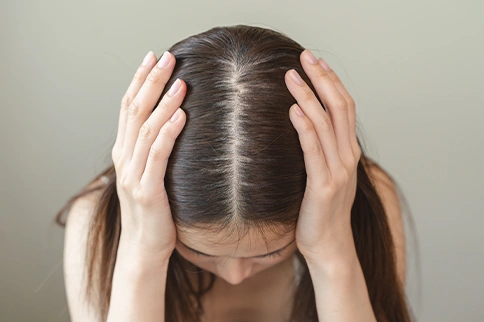
Are you noticing your hair part widening or your scalp becoming more visible under bright light? These subtle changes are often early signs of female pattern baldness - a progressive condition influenced by genetic, hormonal, and lifestyle factors.
Understanding the causes of female-pattern baldness enables early diagnosis and timely intervention. With personalised evaluation, progression can be slowed and hair density supported effectively.
About Dr Batra’s® Female Pattern Baldness Treatment
Female pattern baldness at Dr Batra’s® is managed through a personalised, root-cause-based approach. Doctors assess hormonal balance, genetic predisposition, nutritional health, stress levels, and scalp condition before recommending customised homeopathy treatment for female pattern baldness.
The treatment aims to:
- Reduce excessive shedding
- Strengthen weakened follicles
- Slow miniaturisation
- Improve scalp balance
- Support visible regrowth
With decades of experience in trichology and homeopathic dermatology, Dr Batra’s® provides safe, non-surgical, long-term care.
Understanding Female Pattern Baldness
Female Pattern Baldness (androgenetic alopecia in women) is a chronic thinning disorder primarily affecting the crown and centre scalp.
Typical Signs:
- Gradual widening of the centre part
- Diffuse crown thinning
- Reduced hair volume
- Increased shedding
How Common is Female Pattern Baldness?
Nearly 30-40% of women experience noticeable thinning by age 50. Early-onset cases are increasingly observed in women in their 20s and 30s, especially with family history or hormonal imbalance.
Causes of Female Pattern Baldness
Female pattern baldness usually results from multiple overlapping factors. The causes are mentioned below.
Primary Causes Overview
| Cause | What Happens Internally | Visible Impact |
|---|---|---|
| Genetics | Follicles inherit DHT sensitivity | Gradual thinning at the crown |
| Hormonal Imbalance | Estrogen-androgen fluctuation | Increased shedding |
| DHT Sensitivity | Hormone binds & shrinks follicles | Finer regrowth |
| Nutritional Deficiency | Weak follicular nourishment | Slow growth, breakage |
| Chronic Stress | Disrupts the hair cycle | Diffuse hair fall |
| Medical Conditions | Alters metabolism/immune balance | Persistent thinning |
1. Genetics
Heredity is the most significant factor. Sensitive follicles gradually shrink, producing thinner strands over time.
2. Hormonal Imbalance
Hormonal shifts play a major role in female baldness causes.
Hormonal Triggers & Their Impact
| Hormonal Stage / Condition | Effect on Hair Growth Cycle |
|---|---|
| Menopause | Reduced estrogen accelerates thinning |
| PCOS | Elevated androgens increase DHT activity |
| Thyroid Disorders | Shortened growth phase |
| Postpartum | Temporary but intense shedding |
3. DHT (Dihydrotestosterone) Sensitivity
DHT attaches to genetically sensitive follicles, gradually miniaturising them.
This leads to:
- Thinner strands
- Shortened growth duration
- Increased shedding
4. Medical Conditions
- Systemic health issues may contribute:
- Iron-deficiency anaemia
- Autoimmune disorders
- Chronic inflammatory diseases
- Thyroid imbalance
Identifying these conditions improves treatment accuracy.
5. Nutritional Deficiencies
Deficiencies in iron, protein, zinc, vitamin D and B-complex vitamins weaken strands and delay regrowth.
6. Chronic Stress
Prolonged stress disrupts hormonal stability and accelerates thinning in predisposed individuals.
Other lifestyle and environmental factors, like chemical treatments, tight hairstyles, pollution, or scalp infections, can worsen the condition. For a detailed breakdown, see the main causes of hair loss in women.
Psychological & Emotional Impact
Hair thinning in women often affects emotional well-being.
- Reduced self-confidence
- Social withdrawal
- Anxiety about the visible scalp
- Lowered self-esteem
Managing emotional health alongside treatment improves outcomes.
Lifestyle & Environmental Contributors
| Factor | How It Worsens Thinning |
|---|---|
| Chemical treatments | Weakens the hair shaft |
| Tight hairstyles | Traction damage |
| Pollution | Oxidative stress |
| Scalp infections | Increased shedding |
Is Female Pattern Baldness Reversible?
While genetic predisposition cannot be eliminated, early intervention can:
- Slow progression
- Improve density
- Strengthen follicles
- Reduce shedding
Early diagnosis improves response rates significantly.
Homeopathy and Root-Cause Treatment
Homoeopathy addresses internal imbalances that contribute to thinning.
At Dr Batra’s®, treatment is customised after evaluating:
- Genetic background
- Hormonal profile
- Nutritional status
- Stress patterns Scalp health
The approach aims to:
- Reduce ongoing hair fall
- Slow follicle miniaturisation
- Strengthen hair roots
- Support visible regrowth
Many patients observe reduced shedding within 4-6 weeks and visible improvement within 3–6 months, depending on individual factors.
Signs of Improvement During Treatment
| Sign of Improvement | What It Indicates |
|---|---|
| Reduced hair fall | Stabilisation of the shedding phase |
| Baby hair growth | Reactivation of follicles |
| Improved density | More follicles are in the growth phase |
| Stronger strands | Better follicular strength |
| Healthier scalp | Reduced inflammation |
Conclusion
- Genetics: Family history increases risk.
- Hormones: Fluctuations (PCOS, menopause) shorten the growth phase.
- Androgen Sensitivity: DHT miniaturises follicles.
- Ageing: Natural reduction in hair density.
- Lifestyle & Medical Factors: Stress, nutrition, thyroid, and medications can worsen thinning.
Frequently Asked Questions
- About Dr Batra’s® Female Pattern Baldness Treatment
- Understanding Female Pattern Baldness
- How Common is Female Pattern Baldness?
- Causes of Female Pattern Baldness
- Psychological Impact
- Lifestyle & Environmental Contributors
- Is Female Pattern Baldness Reversible?
- Homeopathy and Root-Cause Treatment
- Signs of Improvement During Treatment
- FAQs
- References


More Articles
Trending Now
Types of Hair Loss: Understanding Different Hair Loss Conditions
Symptoms of Male Pattern Baldness & Early Signs of Hair Loss
Causes of Male Pattern Baldness: Why Hair Loss Happens in Men
Get Your Personalised Health Treatment Today


Working hours: 10am to 9pm daily.
Have Enquiries?
Leave your details and our hair therapy specialist will respond to your query shortly.