Auspitz Sign – A Key Indicator for Psoriasis Diagnosis
Talk to Our Experts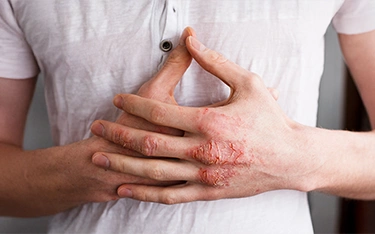

- 25+ Years of experience
- Hair Specialist,
- Skin Specialist
Get AI Powered Quick Summary




The Auspitz sign refers to the appearance of minor bleeding points on the skin after removing scales, most commonly seen in psoriasis. This happens because the scales are covering fragile capillaries in the top skin layer. When they are scraped away, these tiny blood vessels are exposed, causing pinpoint bleeding on the skin. At Dr Batra's®, psoriasis treatment focuses on addressing the root cause through personalised homeopathy, which helps regulate immunity, reduce inflammation, and prevent recurrence without steroids or side effects.
Why Does the Auspitz Sign Happen?
In psoriasis, the immune system triggers rapid skin cell turnover, causing new cells to rise to the surface faster than usual, resulting in thick, scaly patches. Common causes of psoriasis include genetic predisposition, immune system overactivity, stress, and environmental triggers.
- These scales form a protective layer over fragile blood vessels just beneath the skin surface.
- When the scales are removed, the vessels rupture, resulting in pinpoint bleeding.
- Chronic inflammation in the skin further weakens these vessels, making the Auspitz sign more likely to appear.
How Is the Auspitz Sign Diagnosed?
The Auspitz sign is diagnosed through a physical examination. The doctor gently scrapes or removes the silvery scales from a skin plaque using a tool such as a tongue depressor, a magnifying dermatoscope, or a glass slide. If tiny pinpoint bleeding spots appear underneath, the test is positive.
Clinical Evaluation
- The test: Doctor carefully flakes off the dry skin layers
- The result: Tiny drops of blood show up because the blood vessels under the skin are close to the surface and are fragile
- Dermoscopy: The doctors may use a special lighted magnifying tool to view the tiny blood vessels more clearly without causing pain
Test: The Grattage/Scraping Test
The grattage test, or scraping test, is a bedside clinical dermatology method used to examine scaly skin lesions. With a sharp edge or glass slide, a doctor can accentuate silvery-white scales and check for underlying vascular changes such as Auspitz's sign by gently grating or scraping psoriatic plaques.
How does the Grattage Test Work?
- Scale augmentation: Scraping makes the dry and silvery flakes on a psoriatic lesion more distinct and loose
- Auspitz sign: Continuous gentle scraping removes all the scales to reveal a moist red membrane, followed by tiny pinpoint bleeding spots.
- Capillary Exposure: This bleeding happens as the tiny blood vessels near the top layer of skin are exposed and stretched.
Clinical Purpose
- Diagnosis support: It helps confirm plaque psoriasis by separating it from other non-bleeding scaly skin rashes
- Quick assessment: It is done right in the exam room using basic tools like a glass slide or a blunt scalpel.
- Dermoscopy: The doctors may use a special lighted magnifying tool to view the tiny blood vessels more clearly without causing pain
Is the Auspitz Sign Always Accurate?
Auspitz signs are not always accurate. The test has low sensitivity (occurring in only 17% of psoriasis cases) and lacks specificity. As a result, it can also appear in other scaly skin conditions.
Why is it inaccurate?
- Low sensitivity: Many people who have psoriasis do not show the sign when the scales are removed.
- Low specificity: Pinpoint bleeding can happen when the scales are forced off in other non-psoriasis skin issues
Which Types of Psoriasis Show a Positive Auspitz Sign?
The Auspitz sign does not show up in every type of psoriasis. It is mainly seen in plaque psoriasis and is absent in other forms.
- Plaque Psoriasis- Positive: Scraping off the scales reveals tiny bleeding points. This is the most common type where the sign appears.
- Guttate Psoriasis- Negative: Scales are too fine and thin for the sign to show up
- Inverse Psoriasis- Negative: This type has no scales at all, so there is nothing to scrape
- Pustular Psoriasis- Negative: Shows pus-filled bumps instead of scaly patches
- Erythrodermic Psoriasis- Negative: Causes widespread redness and peeling. No localised scaly plaques.
Conditions Linked to the Auspitz Sign
The Auspitz sign is most often seen in psoriasis vulgaris, but it can occasionally be present in other skin conditions, including:
- Actinic keratosis (sun-damaged skin patches)
- Darier's disease (a rare genetic skin disorder)
However, the sign alone does not confirm psoriasis; it must be assessed along with other symptoms of psoriasis, such as redness, itching, and scale formation
How Homeopathy Helps in Psoriasis with Auspitz Sign?
Homeopathy treats psoriasis from within by regulating the overactive immune response that causes rapid skin cell turnover, responsible for scaling and pinpoint bleeding in the Auspitz sign. Remedies are customised to the patient's symptoms, triggers, and overall health, aiming for long-term remission without side effects.
Benefits of Homeopathic Treatment
- Root-cause healing: Targets immune imbalance, not just surface symptoms
- Reduces scaling & inflammation: Minimises skin trauma and recurrence of pinpoint bleeding
- Safe for long-term use: No dependency or steroid-related side effects
- Personalised approach: Remedies matched to individual triggers (stress, diet, climate, hormones)
- Improves overall well-being: Enhances skin health, comfort, and emotional quality of life
Treating Psoriasis at Dr Batra's®
Our integrated approach ensures lasting relief, healthier skin, and improved quality of life, naturally and safely.
- Root-Cause Treatment: Personalised homeopathic medicines to balance immunity, reduce inflammation, and address psoriasis triggers.
- External Skin Relief: DermaHeal UVB light therapy to slow skin cell growth and ease redness, scaling, and itching.
- Lifestyle & Skincare Guidance: Expert tips to prevent flare-ups and support long-term skin health.
- Holistic Expert Care: Backed by 350+ doctors across 200+ clinics, delivering safe, effective, and natural treatment.
- Measured Progress: Transparent tracking with outcome reports, photographs, and medical observations for proven results.
Conclusion
- The Auspitz sign is a valuable clinical clue in diagnosing psoriasis.
- A qualified dermatologist should always interpret it.
- Watch for warning signs: scaly skin, redness, and pinpoint bleeding.
- Seek early medical care to confirm diagnosis and start treatment.
- Timely intervention helps manage symptoms and prevent disease progression.
Frequently Asked Questions
- Why Does the Auspitz Sign Happen?
- How Is the Auspitz Sign Diagnosed?
- Test: The Grattage/Scraping Test
- Is the Auspitz Sign Always Accurate?
- Which Types of Psoriasis Show a Positive Auspitz Sign?
- Conditions Linked to the Auspitz Sign
- How Homeopathy Helps in Psoriasis with Auspitz Sign?
- Benefits of Homeopathic Treatment
- Treating Psoriasis at Dr Batra's®


Get Your Personalised Health Treatment Today


Working hours: 10am to 9pm daily.
Have Enquiries?
Leave your details and our hair therapy specialist will respond to your query shortly.