Why Eczema Itches More At Night
Talk to Our Experts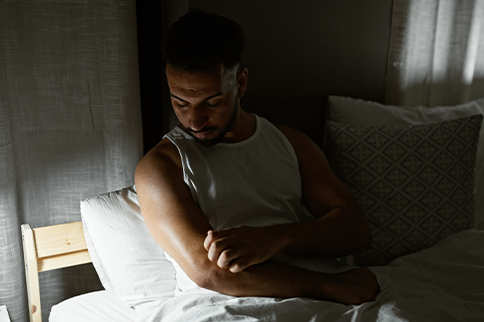

- 25+ Years of experience
- Hair Specialist,
- Skin Specialist
Get AI Powered Quick Summary




Itchy skin is one of the most common symptoms of eczema, a chronic condition that occurs when the skin barrier is weakened. It can affect any part of the body, including the inner elbows, backs of the knees, hands, neck, and face.
But what’s more frustrating is the eczema itching at night. The persistent itch-scratch cycle can disrupt your sleep, affect your mood, and make it harder to function productively during the day.
And you are not alone; almost 97% of patients with eczema experience moderate-to-severe itching.[1] But if the intensity is increasing at night on a regular basis, proper assessment by a medical professional is important. At Dr Batra's, we help identify potential triggers for your flare-ups and create a personalised treatment plan to help you manage your symptoms better.
Why Is Eczema Worse At Night?
If your itching gets worse just before you are about to hit the sheets, there are a few main reasons why you may experience eczema flare-ups at night.
Your Skin Loses More Moisture at Night
Your skin's barrier function follows a natural 24-hour rhythm where water loss increases in the evening, and this can leave an already weakened skin barrier drier, worsening itching and discomfort.[2]
Body and Skin Temperature Rise at Bedtime
Sleeping under a heavy blanket or in a hot, stuffy room can increase skin temperature. And when skin warms up, your blood vessels expand and cause you to itch and scratch.[3]
Natural Anti-Inflammatory Hormone Dips at Night
Cortisol is a hormone produced by the body that helps regulate inflammation. However, its levels change as the day progresses and decline towards midnight. This can exacerbate inflammation and eczema itch at night.[4]
Your Bedroom Environment
Your bedroom environment can also affect night time itching. Dust mites in bedding, heavy blankets, sweat, and dry air from air-conditioning can irritate sensitive skin and trigger eczema flare-ups at night.
Fewer Distractions and Unconscious Scratching
During the day, work and other activities can distract you from the itch. But at night, when things are quiet, it's natural to become more aware of the discomfort. You may also scratch your skin unconsciously while asleep, which further irritates and worsens the itch-scratch cycle. In fact, 30% of adults and 53.3% of children report scratching without realising it.[5]
What Triggers Eczema Itching?
Did you know? About 1 in 4 adults experience adult-onset eczema. But the National Eczema Association says identifying and managing triggers can be the first step in preventing eczema flare-ups at night.[6]
| Trigger category | Examples |
|---|---|
| Irritants | Soaps, fragrances, detergents, hand sanitisers, household cleaners, solvents, shampoos and frequent handwashing. |
| Allergens | Dust mites, mould, pet dander, and pollen. |
| Climate | Heat, dry indoor air, low humidity, excessive air conditioning. |
| Fabrics | Wool, certain synthetic fabrics, rough seams, fabrics that trap sweat, and scratchy labels. |
| Stress | Emotional stress, anxiety, and poor sleep. |
| Hormonal changes | Sometimes, menstrual cycle-related changes can trigger eczema. |
| Skin infections | Bacterial or viral infections that can worsen eczema symptoms. |
| Certain foods | Some foods, such as milk, eggs, or nuts, may trigger symptoms in certain children, particularly those with a confirmed food allergy. |
One thing to remember is that eczema triggers vary from one person to another.
Therefore, it's always advised to keep a symptom diary to help you identify patterns between flare-ups and triggers.
You can always consult a medical professional at Dr Batra's today to learn more. Our doctors understand your individual needs and recommend a personalised homoeopathic treatment plan to help manage flare-ups.
How to Relieve Eczema Itching at Night: A Bedtime Routine
If your flare-ups are keeping you up at night, here's how to relieve eczema itching.
Take a Short, Lukewarm Bath
One of the easiest eczema skin care at night tips is to take a lukewarm bath for 5 to 10 minutes before bed. Use a gentle and fragrance-free cleanser, and pat your skin dry with a soft towel once done. This routine cleanses your skin and removes sweat and irritants.[7]
Moisturise Within Minutes of Bathing
As soon as you are done taking a bath, apply a generous layer of fragrance-free moisturiser while your skin is still slightly damp. This technique is known as the 'soak and seal' and helps lock in moisture and support the skin barrier. It is perfect for moderate-to-severe eczema. But make sure to choose a suitable emollient.[8]
Try Wet Wrap Therapy for Severe Flares
A wet wrap therapy involves applying moisturiser or preferably a prescribed topical medication to affected skin and covering it with a damp layer of fabric, followed by a dry layer. It can help soothe severe eczema flares and improve skin hydration. However, you must use this method only under medical guidance. It is mainly recommended when the flare-ups don’t respond to standard topical treatments.[9]
Choose Soft, Breathable Sleepwear and Bedding
Wear loose-fitting, breathable sleepwear made from soft fabrics such as cotton because rough materials can irritate your skin or trap heat. Soothing fabrics are always helpful. Even when washing your clothes and bedding, be mindful. Always use a fragrance-free detergent, and opt for an extra rinse cycle to remove detergent residue.
Keep Your Bedroom Cool, Clean and Not Too Dry
Create a comfortable sleeping environment. Keep your air-conditioning at a moderate setting and avoid excessively dry air. If dust mites trigger your symptoms, make sure to wash your bedding using hot water and use allergen-proof mattress and pillow covers.
Keep Nails Short and Cover Hands at Night
If you are someone who scratches unconsciously when asleep, keep your nails short and try using cotton mittens at night. But make sure the hand coverings are comfortable, breathable, and not too tight.
Follow Good Sleep Hygiene
Poor sleep can aggravate your eczema. So, following a consistent bedtime and wake-up time is imperative. Wind down before bed and reduce screen use if it interferes with your sleep routine. If itching starts, a cool compress to the affected area can help. You can do it for about 5 to 10 minutes.[10]
Treat the Inflammation, Not Just the Itch
Active and constant flares require prescription eczema treatment. It is important to take care of the underlying immune system inflammation first rather than just masking the itch.[11] So, follow your doctor's instructions and do not stop or change treatment without medical advice. A doctor may sometimes recommend an antihistamine for short-term use to help with sleep. Do not start one on your own.
How Does Homoeopathy Help Manage Eczema?
Homoeopathy takes an individualised approach to health.
When discussing eczema, your homoeopathy doctor may ask about your itching, skin dryness, flare-up patterns, lifestyle, medical history, emotional well-being and potential triggers to develop a personalised treatment plan.
It is important to remember that eczema is a chronic condition with no permanent cure.[12] However, with the right eczema treatment, you can manage symptoms, reduce itching, and maintain better skin health.
And when looking for homeopathy treatment for eczema, make sure to consult a qualified practitioner.
At Dr Batra’s, our doctors don’t follow a one-size-fits-all approach. Rather, it’s personalised to address acute immune flare-ups, support skin barrier repair, and meet your individual treatment needs. Meet a senior doctor at Dr Batra’s today to understand how homoeopathy can benefit you.
When to See a Doctor?
You must consult a doctor if you experience any of the following:
- Constant itching that’s adversely affecting personal and professional life.
- Persistent symptoms despite consistent skincare.
- Signs of infection, such as yellow crusts, pus, excess redness.
- Painful blisters with fever.
- If you notice eczema in infants.
- If the symptoms or the rash are spreading rapidly.
Conclusion
Eczema itching at night can be a frustrating occurrence. It can disrupt your slumber and hamper your day ahead. But when you understand your symptoms and triggers and follow a consistent eczema skin care at night with the necessary treatment, you can break the itch-scratch cycle.
If eczema continues to affect your sleep or daily routine, book a consultation with Dr Batra's to discuss your symptoms. With more than four decades of global experience, Dr Batra offers detailed assessments and a structured approach for effective eczema management. Meet a senior doctor today to discuss a personalised treatment plan.
Sources
- https://pmc.ncbi.nlm.nih.gov/articles/PMC10391776/
- https://pmc.ncbi.nlm.nih.gov/articles/PMC10994754/
- https://www.everydayhealth.com/eczema/itch-scratch-cycle-severe-eczema/
- https://www.ncbi.nlm.nih.gov/books/NBK538239/
- https://pubmed.ncbi.nlm.nih.gov/40841864/
- https://nationaleczema.org/eczema-management/
- https://nationaleczema.org/treatments/bathing/
- https://pubmed.ncbi.nlm.nih.gov/16365257/
- https://pubmed.ncbi.nlm.nih.gov/27886902/
- https://pmc.ncbi.nlm.nih.gov/articles/PMC6301073/
- https://nationaleczema.org/blog/ways-to-avoid-inflammation-if-have-eczema/
- https://my.clevelandclinic.org/health/diseases/9998-eczema
Frequently Asked Questions


Get Your Personalised Health Treatment Today


Working hours: 10am to 9pm daily.
Have Enquiries?
Leave your details and our hair therapy specialist will respond to your query shortly.