
- 25+ Years of experience
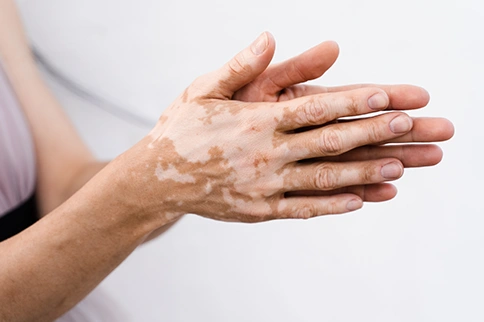
“It usually starts small. A patch on the back of your hand, or near your mouth, a shade or two lighter than the skin around it.”
You catch it in the mirror one morning and think, huh, that's new. Maybe you blame it on dry skin. Maybe you forget about it for a few weeks.
Then it doesn't go away. And if you are being honest with yourself, it might even look a little bigger than last month.
That's usually when the googling starts. And that's also when things get confusing, because search results on treatment for vitiligo range from "don't worry, it's cosmetic" to genuinely alarming forums with worst-case stories. Neither extreme is particularly useful when it's your skin. So let's actually walk through this - what vitiligo is, why it shows up, and how to think about the vitiligo treatment options in front of you, without the noise.
What Is Vitiligo?
In simple terms, vitiligo happens when the cells that give your skin its colour - melanocytes - stop doing their job. Sometimes they slow down. Sometimes they are destroyed altogether. Either way, the result is the same: patches of skin that lose pigment and turn white or milky.
A couple of things worth clearing up right away. Vitiligo isn't contagious - you can't "catch" it from someone or pass it on by touch. It's also not caused by something you ate, a product you used, or anything you did wrong. It's your own pigment system losing its rhythm, nothing more.
It can affect literally anyone, regardless of age, gender, or skin tone. Some people get one patch that stays exactly the same size for years. Others watch it spread steadily. There isn't a single "normal" path it follows, which is honestly a big part of why it feels so unsettling when you are the one dealing with it.
Vitiligo Symptoms: How to Recognise It
The headline symptom is obvious enough - flat, pale or white patches on the skin. But there's usually a bit more going on if you look closely:
- Patches with clean, well-defined edges, often appearing on both sides of the body at once
- Hair on the scalp, brows, or lashes turning white or grey earlier than expected
- Occasional loss of colour inside the mouth or nose
- Patches that seem to show up more in areas that get sun - hands, face, forearms
- A slow, gradual spread over months or years, although in some people it moves faster
One thing that trips people up: the patches themselves don't itch, hurt, or feel any different when you touch them. There's no discomfort pushing you to deal with it, so it's very easy to keep putting it off. Which, understandably, is exactly what a lot of people do - until it's spread enough that ignoring it stops being an option.
What Causes Vitiligo?
Vitiligo has no single, tidy cause, which is part of why "just treat the patch" rarely works long-term. A few things are known to play a role:
- An autoimmune response, where the body mistakenly attacks its own pigment cells
- Genetics - it does tend to run in families, alongside other autoimmune conditions
- A triggering event - sudden stress, a physical injury, or even a bad sunburn
- Oxidative stress building up within the skin cells
- Thyroid or other autoimmune issues, which show up in a fair number of vitiligo cases
Figuring out which of these applies to you isn't just academic curiosity. It shapes what kind of treatment makes sense for you.
White Patches on Skin: Is It Always Vitiligo?
No, not necessarily, and this is where a lot of self-diagnosis goes sideways. A few other conditions can look almost identical to the untrained eye:
- Pityriasis alba - faint, slightly scaly light patches, common in kids, usually on the face
- Tinea versicolor - a fungal infection that leaves patchy discolouration, often across the back or chest
- Post-inflammatory hypopigmentation - lighter skin left behind after a burn, injury, or an eczema flare-up
- Idiopathic guttate hypomelanosis - small white spots on sun-exposed arms and legs, more common as people get older
Here's why this matters more than it seems: each of these needs a different kind of treatment. Something aimed at vitiligo won't do much for tinea versicolor, and vice versa. That's the whole argument for seeing a doctor instead of self-diagnosing from a search result.
How Is Vitiligo Diagnosed
The good news is diagnosis is usually quick and doesn't involve anything invasive. A specialist will typically go through:
- A physical exam - looking at the shape, symmetry, and spread of the patches
- A Wood's lamp examination, where a UV light makes vitiligo patches show up more clearly than other pigment conditions
- A review of your medical and family history, including any autoimmune conditions
- Blood tests in some cases, mainly to check thyroid and related markers
- Occasionally a skin biopsy, if the picture still isn't clear after everything else
None of this takes long. But getting the diagnosis right early makes the treatment conversation that follows much more useful.
Different Types of Vitiligo
Vitiligo doesn't show up the same way for everyone, and the type often ends up guiding the treatment plan:
Segmental vitiligo
shows up on one side or one segment of the body, often starts earlier in life, and tends to stabilise faster than the other types.
Non-segmental (generalised) vitiligo
the more common form. Symmetrical patches on both sides of the body, often progressing gradually over time.
Focal vitiligo
one or a couple of isolated patches with no real pattern, which may stay put or may spread.
Universal vitiligo
rare, and involves most of the skin losing pigment.
Acrofacial vitiligo
patches concentrated around the face, fingers, and openings like the mouth and eyes.
Knowing which type you're dealing with matters, because segmental vitiligo, for instance, tends to behave very differently from the generalised kind.
Vitiligo Treatment Options: An Overview
If you are hoping for one clean answer to "what should I do," I'll be upfront - there isn't one. The right treatment depends on the type of vitiligo, how widespread it is, your skin, and how your body responds. Broadly, the vitiligo treatment options on the table include:
- Topical treatments - corticosteroid or calcineurin-inhibitor creams applied directly onto the patches
- Phototherapy - controlled UV exposure, like narrowband UVB, to stimulate pigment production
- Oral medication - sometimes used to help manage the immune response underneath it all
- Surgical options, such as skin grafting, generally reserved for stable, long-standing patches that haven't responded elsewhere
- Camouflage and cosmetic solutions - makeup or dyes that don't treat the condition but help manage how visible it is
- Homeopathic treatment - a personalised approach many patients turn to when they want to address the root cause with fewer long-term side effects
So what's the best treatment for vitiligo? Honestly, it's whatever gets chosen after someone actually looks at your case - your pattern, your history, how your skin has behaved - rather than whatever worked for a stranger on a forum.
Reasons to Choose Homeopathic Treatment for Vitiligo
Many patients come to homeopathy after already trying other routes. A lot of them stay because of how it actually approaches the problem:
- It looks at the underlying trigger - immune, genetic, stress-related - instead of only treating the patch itself
- It's built around your specific case history, not a one-size-fits-all protocol
- It sidesteps the side effects that can come with long-term steroid use or repeated light therapy
- It pairs well with lifestyle changes, which makes the whole approach feel more sustainable
- It suits long-term management, which matters given vitiligo's tendency to come back
To be fair, homeopathy isn't an overnight fix - nothing legitimate is, when it comes to vitiligo. But for a lot of patients, it offers a way to manage the condition without piling more side effects onto skin that's already sensitive.
When Should You See a Doctor?
If it's one small, unchanging patch, there's probably no need to panic. But it's worth getting it checked if:
- The patch is growing, even slowly, over weeks or months
- New patches keep showing up in different spots
- Hair in or near the patch is turning white or grey
- It's somewhere visible, and it's starting to affect your confidence
- Vitiligo or other autoimmune conditions run in your family
Catching it earlier isn't just easier on you emotionally - it genuinely opens up more treatment options, since a few of them work best before the patches spread too far.
Lifestyle and Skin Care Tips for People With Vitiligo
Treatment does most of the heavy lifting, but a few everyday habits make a real difference alongside it:
- Wear sunscreen every day - depigmented skin burns much more easily, and sun damage makes patches more noticeable
- Keep skin moisturised to reduce irritation
- Manage stress where you can - it's a known trigger for flare-ups
- Eat well, with enough antioxidants in your diet to support skin health
- Skip harsh skincare products that could irritate the affected patches
- Give it time. Vitiligo management tends to be slow and steady, not instant
None of this replaces actual treatment. But it does create the conditions for treatment to work the way it's supposed to.
Expert Care at Dr Batra's®
At Dr Batra's®, we know vitiligo isn't just about the skin - it's often about how someone feels every single time they catch their reflection. So we don't stop at treating the patch. We focus on the person it affects.
Our approach at Dr Batra's includes:
- A detailed case history covering your medical background, possible triggers, and lifestyle
- Personalised homeopathic treatment aimed at the root cause of pigment loss, not just what's visible on the surface
- Ongoing monitoring, so the treatment plan is adjusted as your skin actually responds
- Compassionate, judgement-free care that takes the emotional side of vitiligo seriously too
With decades of clinical experience and patients treated across the globe, Dr Batra® brings together science-backed homeopathic care with the genuine, human support this journey often needs.
Conclusion
We wouldn't leave a wound untreated just because it doesn't hurt. There's no real reason to treat a spreading patch any differently.
Vitiligo isn't something to hide or feel embarrassed about, and it's not something you're stuck living with untreated either. Understanding your type, knowing your triggers, and picking the right treatment path can genuinely change things - not just how your skin looks, but how comfortably you move through your day.
If there's a patch that's new, growing, or just refusing to fade, don't sit on it. Talk to the team at Dr Batra's® for a proper, personalised assessment - and take the first step back toward skin that feels like yours.
Frequently Asked Questions
- What Is Vitiligo?
- Vitiligo Symptoms: How to Recognise It
- What Causes Vitiligo?
- White Patches on Skin: Is It Always Vitiligo?
- How Is Vitiligo Diagnosed
- Different Types of Vitiligo
- Vitiligo Treatment Options: An Overview
- Reasons to Choose Homeopathic Treatment for Vitiligo
- When Should You See a Doctor?
- Lifestyle and Skin Care Tips for People With Vitiligo


More Articles
Trending Now
Cystic Acne: Causes, Symptoms, and Effective Treatment Options
Homeofacial vs. Peel vs. Microdermabrasion: Key Differences
Your Complete Guide to HomeoFacials
Get Your Personalised Health Treatment Today


Working hours: 10am to 9pm daily.
Have Enquiries?
Leave your details and our hair therapy specialist will respond to your query shortly.