Eczema in Babies: Symptoms Parents Shouldn't Ignore
Talk to Our Experts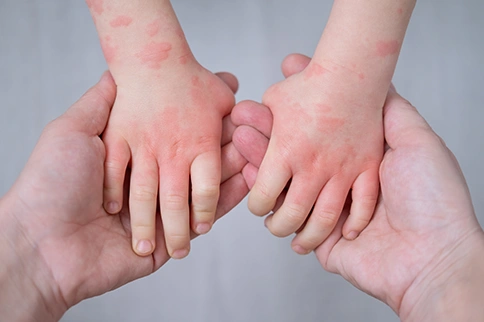

- 25+ Years of experience
- Hair Specialist,
- Skin Specialist
Get AI Powered Quick Summary




Seeing your baby struggle with itchy, irritated skin can be difficult for any parent. The constant scratching, redness, and sleepless nights can leave you worried and wondering how to make your little one feel better.
It could simply be eczema. While the condition can be distressing for both babies and parents, understanding what triggers it and recognising the early signs can help you take the right steps towards your baby's skin health.
Let's explore the symptoms, causes, and ways to care for your baby's delicate skin.
What Is Eczema in Babies? Understanding Infant Skin Conditions
Eczema, or atopic dermatitis, happens when a baby's skin barrier isn't doing its job of locking moisture in and irritants out. The result is dry, inflamed, often itchy patches - usually on the face first, then later in the folds of the elbows and knees.
A newborn's skin is thinner than yours, so it loses water faster and reacts to things an adult wouldn't notice - a rough blanket, a cold snap, a new soap, etc. A tiny trigger causing a big reaction isn't your baby being difficult. It's skin that hasn't toughened up yet.
And if you are wondering whether you caused this, you didn't. Eczema shows up in many babies during their first year, and for most, it fades as they grow older. It's not a parenting failure - it's just how some babies' skin works, and it usually responds well once you know what it needs.
Causes of Baby Skin Rash: An Overview
Before we zoom in on eczema specifically, it's worth knowing that plenty of things can cause a baby skin rash, and not all of them are eczema at all:
- Heat rash, those tiny prickly bumps after a warm nap
- Contact irritation, from a detergent, fabric, or new product
- Cradle cap, scaly and greasy on the scalp
- Diaper rash, from skin staying damp too long
- Allergic reactions to food, bites, or the environment
- Eczema itself, dry, recurring, and genuinely itchy
- Viral rashes, usually with a fever attached
Honestly, the easiest way to tell these apart isn't how the rash looks on day one - it's how it behaves over the following week. Does it fade once you remove the trigger, or does it keep coming back in the exact same spot no matter what changes?
What Causes Eczema in Babies? Key Triggers Explained
There's almost never a single cause behind baby eczema. It's usually an inherited tendency meeting a handful of everyday triggers:
- A skin barrier that holds moisture less well
- Family history of eczema, asthma, or allergies
- Dry air or a sudden weather shift
- Harsh soaps, detergents, or fragranced products
- Rough or synthetic fabrics
- Overheating or sweating
- Drool on the skin near the mouth
- Certain foods, in already-sensitive babies
- Extra strain from illness
Rarely is it just one of these. Usually, two or three line up at once and tip a baby into a flare.
Common Baby Eczema Symptoms to Watch Out For
- Dry, rough, or scaly patches
- Redness on cheeks, forehead, or scalp
- Small bumps that ooze or crust if scratched
- Obvious itchiness - rubbing against bedding, scratching with feet
- Skin that thickens in spots that flare repeatedly
- Patches returning to the same places
- Sleep breaking from the itching
- Skin staying rough even without a visible flare
One dry patch after a bath doesn't mean much on its own. What's worth watching for is a pattern - patches that keep returning, itching that breaks sleep, or skin that thickens over time.
How to Identify Eczema vs Other Baby Skin Conditions?
A handful of clues tend to separate eczema from everything else on this list:
- It comes back to the same spots; irritant rashes clear once the trigger's gone
- It's genuinely itchy, unlike heat rash or most viral rashes
- It's dry and rough, not just red or bumpy
- It worsens with weather changes, baths, or certain fabrics
- There's often a family history of eczema, asthma, or allergies
If none of this settles the question in your mind, that's honestly reason enough to have it looked at - you don't need to be certain before you ask a doctor.
Red Patches on Baby Skin: Eczema or Something Else?
This is probably the single most common thing parents search at midnight, and fair enough - red patches can mean a lot of different things:
- Eczema: dry, rough-edged, itchy, recurring in the same areas
- Heat rash: small clustered bumps, usually in a fold, gone once cooled
- Allergic reaction: sudden, sometimes swollen, often tied to a new food or product
- Cradle cap: yellowish, scaly, mostly scalp and eyebrows
- Infection: warm, swollen, or oozing, unlike ordinary dryness
The short version: dry, itchy, and repeating usually points to eczema. Sudden onset, rapid spread, or fever means you shouldn't wait to get it checked.
Baby Eczema on Face vs. Body: Where It Commonly Appears
Where eczema shows up tends to change with age. In the early months, baby eczema on the face is by far the most common presentation - cheeks, forehead, and scalp - mostly because a young infant spends so much time on their back, face exposed to bedding, drool, and constant wiping.
Once your baby moves into toddlerhood, it often shifts to the body - the creases behind the knees, inside the elbows, around the wrists and ankles, anywhere skin folds trap heat and moisture. Plenty of babies go through both phases. Keeping a rough note of where patches show up, and when, can be genuinely useful for a doctor later on.
Is Baby Eczema Hereditary or Triggered by Environment?
Honestly, it's both, and they work together. If you or a close family member has eczema, asthma, or hay fever, your baby is noticeably more likely to develop it too - often because that inherited skin barrier isn't quite as good at holding moisture in.
But having the tendency isn't the same as having a flare. Genetics sets the stage; the environment decides when the curtain goes up. A baby can go weeks without trouble until dry winter air, a new detergent, or an overheated room sets things off. You can't rewrite your baby's genes, but the environment is where you can make a difference.
How to Care for a Baby's Eczema-Prone Skin
Day-to-day habits usually matter more than whatever products are in the tub. A few things worth building into the routine:
- Moisturise right after bath time, while skin is still damp
- Keep baths short and lukewarm
- Stick to fragrance-free products, for skin and laundry alike
- Dress in soft, breathable fabrics like cotton, not wool
- Keep nails short to limit scratching damage
- Watch room temperature - overheating is an overlooked trigger
- Introduce new products one at a time
- Above all, be consistent - routine beats occasional effort
Can Food Allergies Cause Baby Eczema?
Sometimes, yes - but it's not the reason behind every case. Eczema and food allergies do show up together more often than you'd expect by chance, with cow's milk, egg, and peanut being the usual suspects in babies already prone to eczema.
That's not an invitation to start cutting foods out on your own, though. Elimination diets without guidance can affect a baby's nutrition, and in most cases the eczema has nothing to do with food at all. If you notice flares lining up with a specific food, bring it up with your doctor rather than guessing on your own.
When Should You Consult a Doctor for Itchy Skin in Babies?
Ordinary dryness that clears with regular moisturising usually isn't something to worry about. It's worth booking a visit when:
- Itching interrupts sleep or feeding
- Patches keep spreading or aren't budging with basic care
- There's oozing, crusting, or signs of infection
- A fever shows up, or the rash spreads fast
- Flares consistently follow a particular food
- Your baby seems generally unsettled in their skin
Go with your gut here. Nobody sees your baby's skin more often than you do, and that counts for something.
How Is Eczema in Babies Diagnosed?
The good news is diagnosing eczema rarely involves anything invasive. Usually, a doctor will:
- Examine the skin's look, feel, and location
- Ask about family history of eczema, asthma, or allergies
- Ask about the flare pattern you have noticed
- Rule out infection or an allergic reaction
- Occasionally suggest allergy testing
Showing up with a few notes on when patches appear and what makes them better or worse tends to make this quicker and more accurate.
Eczema Treatment for Babies: What Works Best?
There's no single fix that works the same way for every baby - eczema treatment works best when it's built around your baby's specific symptoms. The approaches that consistently help share a few things in common:
- Daily moisturising, the foundation everything else builds on
- Identifying and reducing triggers, not just treating flares
- Gentle bathing habits that protect the skin barrier
- Doctor-guided treatment for persistent or widespread flares
- Breaking the itch-scratch cycle
- Patience - barrier repair happens gradually
What tends to work isn't reacting hard to each flare. It's a quiet, steady routine that gradually makes flares rarer and milder.
How Does Homeopathy Help in Managing Baby Eczema?
Homeopathy considers more than just the affected skin, taking into account your baby's overall health, eczema flare-up patterns, and family history of allergies. The idea is to support the body's own regulation rather than just suppressing what's on the surface.
This fits infant skin well, since a baby's system is still developing and needs something gentle enough for regular use. Homeopathic care is generally well tolerated in babies, making it a comfortable fit for the slow, consistent management eczema usually responds to.
Expert Care at Dr Batra's®
At Dr Batra's®, we understand how distressing it can be to see your baby struggle with skin discomfort and how difficult it can be to find a solution. We provide personalised care and regular follow-ups to support your baby's skin health.
- A detailed case history covering your baby's skin pattern, family history, and likely triggers
- Personalised homeopathic treatment built around your baby, not a generic protocol
- Gentle, age-appropriate care that takes infant skin's sensitivity seriously
- Ongoing follow-up, so the plan adjusts as your baby grows
- Judgment-free guidance for parents figuring this out for the first time
With decades of clinical experience, Dr Batra's® provides science-backed homeopathic treatment for eczema.
Conclusion
That patch on your baby's cheek, or the itching keeping them up at night, isn't in your head, and lotion alone will never fix it. Eczema in babies is common, well understood, and manageable once you know what's driving it.
You don't need every answer tonight. What helps is knowing what to watch for, when it's time to see someone, and understanding there's a real path forward here, not just more guesswork.
If your baby's skin has been trying to tell you something, don't wait for it to get worse before you listen. Reach out to the team at Dr Batra's® for a gentle, personalised assessment, for your baby's comfort and yours.
Frequently Asked Questions
- What Is Eczema in Babies? Understanding Infant Skin Conditions
- Causes of Baby Skin Rash: An Overview
- What Causes Eczema in Babies? Key Triggers Explained
- Common Baby Eczema Symptoms to Watch Out For
- How to Identify Eczema vs Other Baby Skin Conditions?
- Red Patches on Baby Skin: Eczema or Something Else?
- Baby Eczema on Face vs. Body: Where It Commonly Appears
- Is Baby Eczema Hereditary or Triggered by Environment?
- How to Care for a Baby's Eczema-Prone Skin
- Can Food Allergies Cause Baby Eczema?
- When Should You Consult a Doctor for Itchy Skin in Babies?
- How Is Eczema in Babies Diagnosed?
- Eczema Treatment for Babies: What Works Best?
- How Does Homeopathy Help in Managing Baby Eczema?
- Expert Care at Dr Batra's®


Get Your Personalised Health Treatment Today


Working hours: 10am to 9pm daily.
Have Enquiries?
Leave your details and our hair therapy specialist will respond to your query shortly.