Get AI Powered Quick Summary




Did you suffer from atopic eczema as a child and now suffer from allergic rhinitis as an adult? Is your child suffering from red, itchy rashes while you or your partner suffers from seasonal allergies or asthma? If that's the case, it's not a coincidence. Your child's eczema rash may be associated with allergic rhinitis or asthma.
According to a study by the National Centre for Biotechnology Information (NCBI), if one or both parents have eczema, asthma, or seasonal allergies, their child is more likely to develop eczema. Furthermore, children with the illness may be prone to allergies or asthma. Scientists are still investigating the connection between the illnesses. Understanding the link can help you manage the condition. There are several things you may do to relieve the itch and possibly reduce your chances of developing allergies.
What Is Atopic Eczema, and Who Gets It?
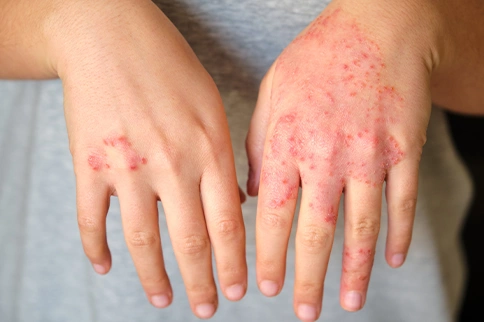
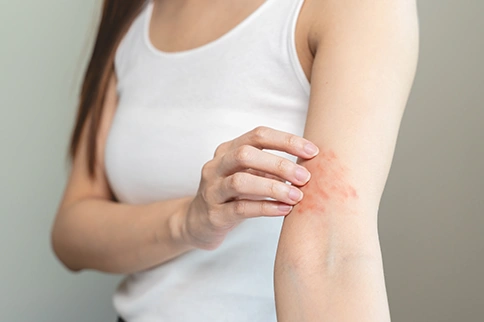
Eczema refers to several distinct skin ailments. Most of the time, though, it refers to a common skin ailment known as atopic dermatitis, which produces a dry, itchy, red rash. Scratching it can cause it to leak and crust over. If you do it repeatedly, your skin will thicken and darken.
The majority of people who have eczema develop it as children. Symptoms usually improve by age 5 or 6, and flare-ups disappear in more than half of children by adolescence. However, many adults still have the condition, albeit with reduced symptoms. Adults are less likely to develop eczema for the first time.
The Eczema-Allergy Relationship
Doctors used to believe that eczema was simply an allergic reaction caused by your body overreacting to a harmless irritant such as pollen or dander. Most dermatologists now agree that eczema is an issue with the skin's outer layer.
Nonetheless, they are aware that it is linked to allergic disorders such as food allergies, allergic rhinitis, and asthma. According to a study by the NCBI,
- Up to 80 per cent of children with eczema develop rhinitis or asthma later in life.
- 35 per cent of individuals who have asthma or nasal allergies had eczema as children.
- If a mother has allergies, her kid has a one-in-three chance of developing eczema.
- 37 per cent of children with moderate to severe eczema also have food allergies.
How Are Atopic Eczema and Allergic Rhinitis Connected?
Atopic eczema and allergic rhinitis are linked by a shared genetic tendency towards an overactive immune response known as atopy. Eczema appears first in infancy, weakens the skin barrier and allows allergens to sensitise the immune system, a progression called the allergic march that can lead to allergic rhinitis or asthma later. The Th2 immune pathway, which releases inflammatory chemicals such as IL-4, IL-5, and IL-13, is responsible for both conditions. Due to overlapping genetic risk factors, they form the atopic triad.
Causes of Atopic Eczema
- The precise cause of atopic eczema is unknown; however, it is obvious that it is not due to a single factor.
- People who suffer from allergies are more likely to develop atopic eczema. The term “atopic” refers to hypersensitivity to allergens.
- It can run in families and is frequently associated with other illnesses such as asthma and allergic rhinitis.
- Soaps, detergents, stress, and the weather are common triggers for atopic eczema symptoms.
- Food allergies can sometimes have a role, especially in young children with severe eczema.
Take the Skin Evaluation Test Now.
What exactly is Allergic Rhinitis?
Allergic rhinitis is a condition in which the nose's mucosal membrane becomes inflamed. It is a reaction to an allergen in the upper respiratory tract. According to the World Allergy Organisation (WAO), around 400 million individuals worldwide suffer from allergic rhinitis, with many going undiagnosed or untreated. It is currently one of the most common ailments, causing sleep problems, irritability, and tiredness.
What are the symptoms of allergic rhinitis?
- Excessive tiredness
- Nose congestion
- Coughing
- Throat pain or scratchiness
- Sneezing
- Runny Nose
- Nose itch
- Eczema-like symptoms include abnormally dry, itchy skin that may blister and drip.
How to Help Reduce Eczema and Allergy Flare-Ups?
Eczema and allergy flare-ups can be reduced by following a few daily skin care habits and reducing environmental and allergy triggers.
- Daily skin care habits
- Use gentle cleansers that are free from perfumes, dyes and harsh chemicals
- Apply thick moisturisers twice a day and right after bathing to lock in hydration
- Pat the skin dry gently with a soft towel
- Environmental and Allergy Controls
- Run an indoor humidifier in dry air
- Wash bedding weekly in hot water to cut down on dust mites
- Choose loose cotton fabrics and avoid wool or tight synthetic materials
- Medical and Professional options
- Consult a specialist for diagnostic testing
- Apply topical treatments like low-strength hydrocortisone or specific anti-inflammatory ointments during active flare-ups
- Consider oral antihistamines if itching during the night and related allergy symptoms disturb your sleep.
When Should You Consult a Skin or Allergy Specialist?
Consult a skin specialist or an allergist when the standard over-the-counter creams and antihistamines fail to control your symptoms when the flares come in the way of one's daily activities or sleep. Here's when you can see a specialist.
When to consult a specialist?
- Severe impact: Constant sneezing, itchy skin and nasal congestion lower your quality of life or disturb sleep.
- Treatment fails: Store-bought or prescription-based medications do not bring relief after a few weeks.
- Frequent infections: If your eczema patches crust, weep and show signs of bacterial infection, or you suffer from chronic sinus issues
- Unclear triggers: You notice severe food and environmental triggers, but haven't had formal testing to confirm it.
- Breathing signs: You develop chest tightness, wheezing, and shortness of breath alongside nose and skin symptoms.
Homeopathic Treatment for Atopic Eczema & Allergic Rhinitis
Homeopathy is a natural, safe, and side-effect-free treatment. It concerns the patient's physical, emotional, and psychological well-being. Many of the symptoms of allergic rhinitis and atopic eczema can be mistaken for those of other conditions, so it's crucial to get the right diagnosis.
- Root-cause approach: Rather than just suppressing symptoms, homeopathy treatment for atopic eczema addresses the underlying cause, excessive histamine release, helping relieve irritation and swelling from within.
- Mind-body healing: The treatment aligns with the mind-body concept, recognising that stress and emotional triggers can worsen eczema. It helps correct the internal imbalances that drive flare-ups.
- Trigger-specific care: Homeopathy treatment for allergic rhinitis begins by identifying the specific triggers behind your symptoms, since these vary from person to person.
- Personalised treatment plan: Based on this diagnosis, a condition-specific plan is devised to strengthen the immune system and offer a more effective and long-term solution.
- Trigger minimisation: Focus stays on reducing the impact of common triggers responsible for allergic rhinitis rather than just managing symptoms as they appear.
- Safe and long-term use: Being natural and side-effect free, homeopathy is suitable for long-term management of both conditions without risks associated with conventional treatments.
Frequently Asked Questions
- What Is Atopic Eczema, and Who Gets It?
- How Are Atopic Eczema and Allergic Rhinitis Connected?
- Causes of Atopic Eczema
- What exactly is Allergic Rhinitis?
- What are the symptoms of allergic rhinitis?
- How to Help Reduce Eczema and Allergy Flare-Ups?
- When Should You Consult a Skin or Allergy Specialist?
- Homeopathic Treatment for Atopic Eczema & Allergic Rhinitis


More Articles

Trending Now
Homeopathic Medicines For Indigestion
Tired of taking allergy shots? Now, take homeopathy for effective results
Things to keep in mind to prevent an allergic reaction
Get Your Personalised Health Treatment Today


Working hours: 10am to 9pm daily.
Have Enquiries?
Leave your details and our hair therapy specialist will respond to your query shortly.