Vitiligo vs Albinism: Know the Difference
Talk to Our Experts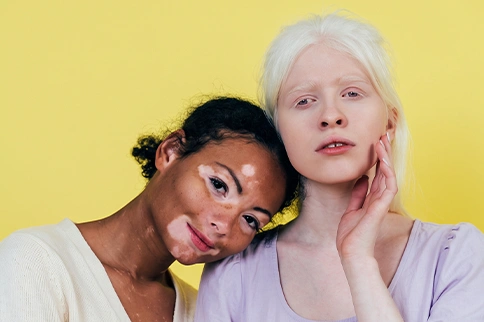
- 25+ Years of experience
- Hair Specialist,
- Skin Specialist
Get AI Powered Quick Summary




"Both show up as a loss of colour in the skin - so why is one something you are born with, and the other something that can appear out of nowhere at thirty?"
They get lumped together all the time. Someone sees pale, patchy, or unusually light skin and reaches for whichever word they half-remember - and the two conditions get treated as one thing. They aren't. One is written into your genes before you're born; the other develops later, when the body turns on its own pigment cells.
Getting the difference right matters more than it sounds - it changes what to watch for, what care actually helps, and what you can realistically expect. So let's clear it up: what vitiligo and albinism each are, how to tell them apart, and where genuine help lies.
What Is Vitiligo? Understanding Skin Pigmentation Disorders
Your skin gets its colour from melanin, made by cells called melanocytes. Skin pigmentation disorders are conditions where that colour is lost, reduced, or unevenly distributed - and vitiligo is among the most recognised. In vitiligo, the immune system mistakenly attacks and destroys melanocytes in patches, so colour disappears, leaving smooth, well-defined white patches. It isn't present at birth - it develops over time, can appear at any age, and often first shows up in early adulthood. The pattern is unpredictable: patches may stay put for years, spread slowly. Crucially, these melanocytes once worked normally - they were switched off, not missing from the start. That fact cleanly separates vitiligo from albinism.
What Is Albinism? Causes and Overview
Albinism is a group of inherited genetic conditions you are born with. Here, the melanocytes are present, but a genetic change stops them from making melanin properly - so pigment is reduced or absent from the very beginning, and across the whole body rather than in patches.
Because melanin also shapes eye development, albinism affects far more than skin colour - it typically involves the skin, hair, and eyes together (the most common form is called oculocutaneous albinism for exactly that reason). Vision problems are a defining feature, not an occasional extra. And it doesn't come and go or spread: it's stable and lifelong, set at conception. Management is about protection and support rather than reversal, since you can't undo a genetic instruction.
Vitiligo vs Albinism: Key Distinguishing Factors
If you remember nothing else, remember these four:
- When it starts - albinism is present at birth; vitiligo develops later in life.
- The cause - albinism is genetic and inherited; vitiligo is autoimmune.
- The pigment cells - in albinism, they are present but can't make melanin; in vitiligo, they were working, then got destroyed.
- What's affected - albinism affects the whole body (skin, hair, and eyes); vitiligo causes patchy loss, usually on the skin.
Add one more - albinism is stable while vitiligo can change over time - and almost every other difference flows from these.
Common Vitiligo Symptoms to Watch Out For
Vitiligo symptoms are usually visible rather than felt - it isn't typically painful or itchy. The signs to know:
- Milky-white patches with fairly clear borders, most often on the face, hands, arms, feet, and around body openings
- A symmetrical pattern in many cases, with similar patches on both sides of the body
- Premature whitening of hair on the scalp, eyebrows, eyelashes, or beard
- Patches that change - staying stable, enlarging, or new ones appearing over time
- Colour loss inside the mouth or nose in some people
The patches are simply areas where colour has gone - the surrounding skin looks and behaves normally, which is why the contrast can be so striking, especially on deeper skin tones.
Common Albinism Symptoms to Watch Out For
Albinism symptoms start at birth and involve the eyes as much as the skin. Common features include:
- Very light skin and hair from birth - often white, pale blond, or light brown, depending on the type
- Light-coloured eyes and reduced pigment in the iris
- Vision problems - reduced sharpness, involuntary eye movements (nystagmus), sensitivity to light (photophobia), and issues with depth perception
- High sun sensitivity, with skin that burns very easily and no ability to tan
The eye involvement is the real giveaway: skin and hair colour vary between types, but the vision differences are a consistent thread - and why albinism is diagnosed early.
Causes of Albinism vs Causes of Vitiligo
The causes sit at opposite ends of the spectrum - the heart of the whole comparison.
Albinism is genetic: inherited changes in genes that control melanin production, usually when a child inherits an altered gene from both parents. Melanocytes are present; the instructions to make pigment simply don't work. It's set before birth and can't be "caught" or triggered.
The causes of vitiligo are largely autoimmune: the immune system turns on the body's own melanocytes and destroys them. Why it isn't fully understood, but genetics, a family tendency towards autoimmune conditions, and triggers like stress, skin injury, or sunburn appear to play a part. Unlike albinism, you aren't born with it - it develops.
White Patches on Skin: Vitiligo or Something Else?
White patches on skin are what send most people searching - but vitiligo isn't the only cause, and jumping to conclusions can send you down the wrong path. Other possibilities include:
- Fungal infections such as tinea versicolor, which cause lighter (or darker) scaly patches
- Pityriasis alba, common in children - pale, slightly scaly patches, often on the face
- Post-inflammatory pigment loss, where colour fades after eczema, a burn, or another skin injury
- Other, rarer conditions that a professional can distinguish
Vitiligo patches tend to be smooth (not scaly), sharply defined, and fully white rather than just lighter. But telling these apart reliably isn't a job for a search bar - the right treatment depends on the right diagnosis, so colour loss that's spreading or not settling is worth having looked at.
Vitiligo vs Albinism: Comparison Table
A side-by-side, at a glance:
| Feature | Vitiligo | Albinism |
|---|---|---|
| Onset | Develops later in life, at any age | Present from birth |
| Cause | Autoimmune (melanocytes destroyed) | Genetic, inherited (melanin not produced) |
| Pigment cells | Once functional, then lost | Present but non-functional |
| Area affected | Patchy, usually skin (and some hair) | Whole body - skin, hair, and eyes |
| Eyes/vision | Usually unaffected | Vision problems are a defining feature |
| Progression | Can spread or change over time | Stable and lifelong |
| Contagious? | No | No |
Is Vitiligo Contagious or Hereditary?
Two of the most common worries - and both deserve a plain answer.
Contagious? No. Vitiligo is not an infection and cannot be passed to anyone - not through touch, sharing food, or any other contact - and the same is true of albinism. Worth stating plainly, because the visible nature of both can invite misplaced worry and even unwarranted stigma.
Hereditary? Partly, for vitiligo. There's a genetic thread - it can run in families and is linked to a broader autoimmune tendency - but most people who develop it have no affected relative, so a family history is far from a guarantee. Albinism, by contrast, is directly inherited, typically when a child receives an altered gene from both parents.
When Should You Consult a Doctor for Loss of Skin Pigmentation?
Any new or changing loss of skin pigmentation is worth a professional opinion - to know what it is and to act early. Consider seeing a doctor if:
- You notice new white or pale patches, or existing ones that are spreading or changing
- The patches are affecting your confidence, mood, or daily life
- You want a clear diagnosis to rule out other causes of colour loss
- There are eye or vision concerns alongside very light skin, particularly in a child
- You'd like to understand your options early, when many conditions respond best
A word on the bigger picture: living with a visible skin condition can quietly wear on self-esteem, and that's a valid reason to seek support in its own right. If low mood ever deepens into hopelessness, or you have any thoughts of harming yourself, please treat it as urgent - reach out to a doctor, a mental health professional, or a helpline straight away, and tell someone you trust. You don't have to carry that alone.
How Does Homeopathy Help in Managing Vitiligo?
An honest starting point: albinism is genetic and can't be reversed - care that centres on sun protection, eye and vision support, and regular monitoring. Homeopathy's role in this comparison is with vitiligo. Because vitiligo is immune-driven, homeopathy treats it as a whole-person condition rather than just a set of patches-looking beneath the surface at your immune tendencies, stress, family history, and overall constitution, and supporting the body's own regulation rather than only the visible skin.
To be straightforward: results vary, vitiligo can be slow to respond, and outcomes depend a great deal on how early and how consistently it's managed. Homeopathy is best seen as part of a considered, root-cause approach with generally fewer side effects - not an overnight fix. For extensive or fast-changing cases, it works best within a broader, professionally guided plan built around you after a proper assessment.
Expert Care at Dr Batra's®
At Dr Batra's®, we see loss of skin pigmentation for what it really is - not just a cosmetic concern, but a condition that carries real emotional weight for the person living with it. So we don't hand over a cream and move on; we look at the whole picture, and the person in it.
Our approach includes:
- A detailed case history covering your skin, immune health, stress, family history, and lifestyle
- Personalised homeopathic treatment for vitiligo, aimed at the root immune tendency rather than the patches alone
- Ongoing monitoring, so your plan is adjusted as your skin genuinely responds
- Compassionate, judgement-free, confidential care that takes the emotional side seriously
To be honest: severe or extensive cases are best supported as part of a broader, professionally guided plan, and when a condition is genetic, care focuses on protection and support. With decades of clinical experience and patients treated worldwide, Dr Batra® pairs science-backed homeopathic care with the human understanding these conditions so often need.
Conclusion
Vitiligo and albinism can look related from a distance, but they're fundamentally different stories. Albinism is genetic and present from birth, affecting skin, hair, and eyes together and staying stable for life. Vitiligo is autoimmune, develops later, appears in patches, and can change over time. One you're born with; the other switches on - and that difference is exactly why a proper diagnosis matters, since it shapes what to expect and what genuinely helps.
So if you or someone you love has white patches or unexplained colour loss, don't rely on guesswork. Reach out to the team at Dr Batra's® for a proper, personalised, judgement-free assessment - and get clear answers about what's going on and what to do next.
Frequently Asked Questions
- What Is Vitiligo? Understanding Skin Pigmentation Disorders
- What Is Albinism? Causes and Overview
- Vitiligo vs Albinism: Key Distinguishing Factors
- Common Vitiligo Symptoms to Watch Out For
- Common Albinism Symptoms to Watch Out For
- Causes of Albinism vs Causes of Vitiligo
- White Patches on Skin: Vitiligo or Something Else?
- Vitiligo vs Albinism: Comparison Table
- Is Vitiligo Contagious or Hereditary?
- When Should You Consult a Doctor for Loss of Skin Pigmentation?
- How Does Homeopathy Help in Managing Vitiligo?
- Expert Care at Dr Batra's®


Get Your Personalised Health Treatment Today


Working hours: 10am to 9pm daily.
Have Enquiries?
Leave your details and our hair therapy specialist will respond to your query shortly.