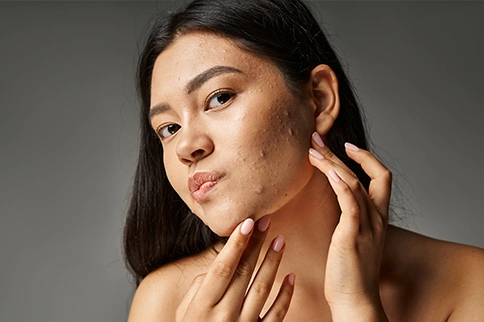
“Nobody warns you that acne can come back after 30.”
You prepare yourself for fine lines, greying hair, or the occasional wrinkle. But painful pimples on your chin every month? That's probably the last thing you expected after your 30s.
If you have been wondering, "I thought acne was a teenage problem. So why am I breaking out now?", you are definitely not alone. Adult acne is becoming increasingly common among women and is often linked to hormonal fluctuations, chronic stress, PCOS, or even menopause. But there is still some good news. Once you understand what's triggering your breakouts, finding the right treatment becomes much easier, and now it's possible with us.
Adult Acne After 30: Quick Facts
| What You Should Know | Details |
|---|---|
| Most affected age group | Women between 30 and 50 years |
| Common breakout areas | Chin, jawline, neck and lower cheeks |
| Biggest trigger | Hormonal fluctuations |
| Can stress make it worse? | Yes, prolonged stress can aggravate breakouts |
| Does menopause cause acne? | It can in some women due to hormonal changes |
| Can it be treated? | Yes. Identifying the underlying cause is the key. |
Types of Adult Acne in Women
Adult acne in women presents as persistent or late-onset breakouts focused around the jawline, lower face, and chin. It is categorised by lesion type and severity, including inflammatory (papules and pustules), comedonal (whiteheads and blackheads), and severe nodulocystic acne, which are driven by hormonal shifts. Here are the types of adult acne in women.
1. Late-onset acne: New acne that develops for the first time after the age of 25 frequently appears along the chin, the jaw and the neck.
2. Persistent acne: The breakouts that continue past the teenage years straight into adulthood, worsen clinically before menstruation.
3. Comedonal Acne: This is characterised by plugged pores that form open blackheads or closed whiteheads without widespread skin swelling.
4. Nodulocystic Acne: Severe form features deep, painful and tender lumps or fluid-filled cysts beneath the skin that carry a high risk of scarring
Adult Acne vs Teenage Acne: What's Different?
A pimple is a pimple, but the reason it appears at 15 isn't necessarily the same as at 35.
Teenage acne is largely driven by puberty and often settles with age. Adult acne in women over 30, on the other hand, tends to be more persistent, more painful, and closely linked to what's happening inside the body.
| Teenage Acne | Adult Female Acne |
|---|---|
| Mostly affects the forehead, nose and cheeks | Commonly appears on the chin, jawline and neck |
| Triggered by puberty | Often linked to hormonal imbalance, stress, PCOS or menopause |
| Usually improves with age | Can start for the first time after 30 |
| Responds well to basic acne care | Often needs a more personalised treatment approach |
This is why using the same face wash you relied on as a teenager may not solve the problem today.
Why Do Women Get Acne After 30?
If you have been wondering, "Why am I getting acne now?", you are not imagining things. Adult acne is becoming increasingly common, especially among women.
One of the biggest reasons is that your hormones continue to change throughout adulthood. Your menstrual cycle, pregnancy, postpartum changes, PCOS, and even the transition to menopause can all influence how much oil your skin produces. When excess oil combines with dead skin cells and bacteria, pores become clogged, leading to recurring breakouts.
But hormones aren't the only piece of the puzzle.
Everyday factors like chronic stress, poor sleep, unhealthy eating habits, pollution, certain medications, and even using the wrong skincare products can make your skin more prone to acne. In many cases, it's a combination of these triggers-not just one-that keeps the cycle going.
The first step towards clearer skin isn't finding another acne cream. It's understanding why your skin is breaking out in the first place.
What Causes Adult Acne in Women?
There's no single answer to the question of what causes adult acne among women. For most women, several factors work together to trigger recurring breakouts. So, everything should be taken care of inside the body.
Hormonal Imbalance
This is one of the most common causes of adult female acne.
Small changes in hormone levels can stimulate the skin's oil glands, causing excess sebum production. Over time, this can clog pores and trigger inflammation, resulting in painful acne-particularly around the chin and jawline.
Hormonal acne often worsens:
- A few days before your periods
- During PCOS
- After stopping birth control pills
- During perimenopause or menopause
Stress
Ever noticed a breakout before a big presentation or after a particularly hectic week?
That's because prolonged stress increases cortisol, a hormone that can stimulate oil production and inflammation. While stress may not directly cause acne, it can certainly make existing breakouts worse if not taken care of.
PCOS
For many women, PCOS acne can be one of the earliest signs of Polycystic Ovary Syndrome (PCOS).
If your acne is accompanied by irregular periods, unwanted facial hair, weight gain, or hair thinning, it's important to get evaluated rather than treating the skin alone.
Menopause and Perimenopause
Many women are surprised when acne returns in their 40s.
As estrogen levels decline, androgens exert a greater influence on the skin. This can lead to increased oil production and painful breakouts-particularly around the lower face.
We'll explore this in more detail in the next section.
Lifestyle and Skincare Habits
Sometimes, the culprit isn't hormonal at all.
Factors like:
- Sleeping with makeup on
- Using pore-clogging cosmetics
- Smoking
- Diets high in processed foods
- Lack of sleep
- Frequent stress
can all contribute to recurring acne or make existing breakouts more difficult to manage.
Who Is More Likely to Develop Adult Acne?
Adult women are more likely to develop adult acne than men due to ongoing hormonal fluctuations related to pregnancy, menstrual cycles, menopause and underlying conditions such as PCOS.
The key risk factors:
- Adult women experience frequent hormonal shifts that trigger excess oil production. They show breakouts along the chin, jawline and lower face.
- Genetics also plays a key role; individuals with parents or siblings who suffered from acne are far more prone to it.
- Individuals experiencing high stress produce more cortisol, which stimulates the oil glands and causes inflammation.
- Use of corticosteroids, lithium, or hormonal treatments can induce breakouts.
- Regular use of sunscreens, heavy, oil-based, or comedogenic makeup, and skincare products can trap debris in pores.
Is Your Acne Hormonal? Here's How to Know
Not every breakout is hormonal, and identifying signs of female hormonal acne early can help you avoid relying on the wrong products. Sometimes, acne is triggered by skincare products, environmental factors, or even certain medications. But if your acne keeps coming back despite trying different face washes and creams, your hormones could be playing a bigger role than you realise.
Here are a few signs that point towards hormonal acne in women.
You may have hormonal acne if you:
- Get breakouts mainly around the chin, jawline or neck
- Notice painful, deep or cystic pimples
- Experience flare-ups around your menstrual cycle
- Continue getting acne well into your 30s or 40s
- Have acne along with irregular periods or symptoms of PCOS
- Notice new breakouts during perimenopause or menopause
If you identify with several of these signs, it's worth consulting a doctor to understand what's driving your breakouts rather than relying on over-the-counter products alone.
Can Menopause Really Trigger Acne?
When most women think about menopause, acne rarely comes to mind. But changing hormones during this phase can have a noticeable impact on your skin.
As estrogen levels decline, androgen hormones begin to have a stronger influence. This can stimulate the skin's oil glands, making it easier for pores to clog and become inflamed.
You may notice:
- Breakouts around the jawline and chin
- Skin that feels dry but is still acne-prone
- Pimples that take longer to heal
- Dark marks that linger even after the acne settles
The good news is that menopausal acne can be managed. The key is recognising that it's often driven by internal hormonal changes rather than poor skincare or hygiene.
Can Birth Control Pills Cause or Treat Acne?
Birth control pills containing estrogen and progestin clear the skin by lowering androgen levels and reducing oil production. Here's how birth control treats acne.
How Birth Control Treats Acne
- Combination Hormones: Pills with estrogen and progestin decrease testosterone and other androgens.
- Approved Brands: Specific options have formal approval for acne treatment.
- Timeline: Results usually take two to three months of consistent use
- Less Oil: Lower androgens mean your skin pores produce less sebum, preventing clogs.
How Is Adult Acne Diagnosed?
Since adult acne in women over 30 often has multiple triggers, diagnosis goes beyond examining the skin.
Your doctor may ask about:
- Your menstrual cycle and hormonal history
- When the acne first started
- The location and severity of the breakouts
- Current medications
- Stress levels and lifestyle habits
- Any symptoms of PCOS or menopause
- Family history of acne
If required, additional tests may be recommended to rule out hormonal imbalances or underlying medical conditions.
Understanding the "why" behind your acne helps shape the most effective treatment plan.
Best Treatment for Hormonal Acne in Women
There's no universal solution for hormonal acne. The best treatment for hormonal acne in women depends on the underlying cause, the severity of the acne, and your overall health.
In many cases, a combination of treatments works best.
| Treatment Option | How It Helps |
|---|---|
| Prescription medications | Help reduce inflammation and control acne |
| Hormonal therapy* | May be recommended in suitable cases to manage hormone-related breakouts |
| Professional skin procedures | Can improve acne scars and post-acne pigmentation |
| Healthy lifestyle changes | Help reduce triggers like stress, poor sleep and unhealthy eating habits |
| Personalised homeopathic treatment | Focuses on addressing underlying triggers and supporting overall skin health |
Your doctor will determine whether hormonal therapy is appropriate for your condition.
Alongside medical treatment, a consistent skincare routine and healthy lifestyle habits can make a noticeable difference in managing breakouts.
Dr Batra's® Personalised Approach to Adult Acne
If you have tried multiple acne creams, changed your skincare routine, and are still dealing with the same painful breakouts, it may be time to look beyond the surface.
At Dr Batra's®, treatment focuses on understanding why your acne keeps coming back-not just treating the pimples you see.
During the consultation, doctors evaluate factors such as your hormonal health, medical history, lifestyle, stress levels, and skin condition to create a personalised treatment plan. Advanced diagnostic tools like AI Skin Pro further help assess the skin and support more informed treatment decisions.
Depending on your individual needs, personalised homeopathic treatment aims to:
- Address underlying triggers contributing to recurring acne
- Support the body's natural healing response
- Help reduce the frequency of breakouts
- Promote healthier skin from within
- Improve overall skin health over time
Backed by 35+ years of clinical expertise, 350+ experienced doctors, 200+ clinics across 7 countries, and 1.5 million+ happy patients globally, Dr Batra's has helped patients manage a wide range of chronic skin conditions through personalised homeopathic care.
Everyday Habits That Help Keep Adult Acne Under Control
While you can't always control hormonal changes, a few simple habits can help reduce flare-ups and support healthier skin over time.
Stick to a simple skincare routine
More products don't always mean better results. Cleanse, moisturise and protect your skin with sunscreen every day. If you are trying new skincare, introduce one product at a time to see how your skin responds.
Don't pick or squeeze pimples
It might be tempting, but picking acne can push bacteria deeper into the skin, increase inflammation, and leave behind scars or dark marks.
Prioritise good sleep
Your skin repairs itself while you sleep. Aim for 7-8 hours of quality sleep each night to support your skin's natural healing process.
Manage stress
Whether it's yoga, walking, meditation or simply taking a break from your screen, finding healthy ways to manage stress can benefit both your mind and your skin.
Eat a balanced diet
There's no universal "acne diet", but eating plenty of fruits, vegetables, whole grains and lean protein while cutting back on highly processed foods may help support overall skin health.
Keep your hands off your face
Touching your face frequently can transfer dirt, oil and bacteria, increasing the risk of clogged pores on your skin.
Be patient with treatment
Adult acne rarely disappears overnight. Whether you are using prescribed medication or following a personalised treatment plan, consistency is the key to getting good results.
When Should You See a Doctor?
An occasional pimple isn't usually a cause for concern. But if your acne is becoming more frequent, painful or difficult to manage, it's worth seeking professional advice.
One should consider consulting a doctor if:
- Your acne started after the age of 30 and keeps recurring.
- Over-the-counter treatments aren't working.
- Your breakouts are painful, deep or cystic.
- Acne is leaving behind scars or dark spots.
- You also have irregular periods, unwanted facial hair or sudden hair thinning.
- Acne is affecting your confidence or emotional well-being.
Early diagnosis can help identify underlying causes and prevent long-term skin damage.
Myth vs Fact: Adult Acne
| Myth | Fact |
|---|---|
| Acne only affects teenagers. | Adult acne is increasingly common, especially in women over 30. |
| Adult acne means you don't keep your skin clean. | Acne is often linked to hormones, genetics, stress and other internal factors-not poor hygiene. |
| Drying out your skin will clear acne faster. | Over-drying the skin can damage the skin barrier and worsen acne. |
| Oily skin doesn't need a moisturiser. | Even oily, acne-prone skin needs the right lightweight moisturiser to stay healthy. |
| Popping pimples helps them heal. | Picking acne increases the risk of infection, scarring and pigmentation. |
Conclusion
Acne after 30 can be frustrating, especially when you thought those days were long behind you. But recurring breakouts are often your skin's way of signalling that something deeper, like hormonal changes, stress, or an underlying health condition, needs attention.
Instead of relying on temporary fixes, focus on understanding what's causing your acne. With the right diagnosis and a personalised treatment plan, clearer, healthier skin is within reach.
If you are struggling with persistent acne, consult the experts at Dr Batra's® to identify the root cause and explore personalised homeopathic treatment designed to support long-term skin health.
Frequently Asked Questions
- Adult Acne After 30: Quick Facts
- Types of Adult Acne in Women
- Adult Acne vs Teenage Acne: What's Different?
- Why Do Women Get Acne After 30?
- What Causes Adult Acne in Women?
- Who Is More Likely to Develop Adult Acne?
- Is Your Acne Hormonal? Here's How to Know
- Can Menopause Really Trigger Acne?
- Can Birth Control Pills Cause or Treat Acne?
- How Is Adult Acne Diagnosed?
- Best Treatment for Hormonal Acne in Women
- Dr Batra's® Personalised Approach to Adult Acne
- When Should You See a Doctor?
- Myth vs Fact: Adult Acne


Get Your Personalised Health Treatment Today


Working hours: 10am to 9pm daily.
Have Enquiries?
Leave your details and our hair therapy specialist will respond to your query shortly.