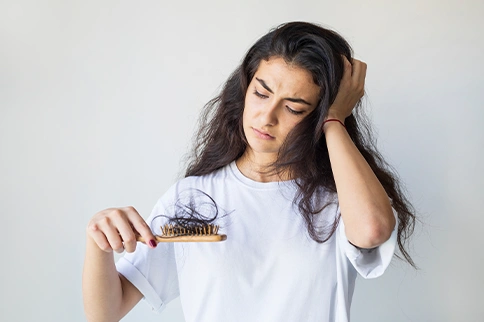
India has some of the hardest municipal water in the world, yet most people never consider water quality to be the reason behind their persistent hair fall and scalp concerns. Calcium and magnesium are dissolved minerals in hard water. These minerals can leave deposits on the scalp and hair shaft over time. This mineral buildup can affect the condition of the hair shaft and scalp, contributing to dryness and increased hair breakage. It also stops moisture from getting into your hair. As a result, your hair can become dull, brittle and more prone to breakage. Mineral buildup from hard water is one of several factors that may contribute to these hair concerns.
When hard water touches your hair, the minerals in it wrap around the hair strand. This creates a kind of layer that blocks moisture, conditioners and oil from getting in. It affects not only the hair strand but also the scalp. Mineral deposits may contribute to scalp buildup and irritation in some individuals. This can disrupt the scalp's natural balance and lead to thinning hair and more hair fall every time you wash your hair.
Does Hard Water Cause Hair Loss?
Hair loss or baldness is not directly caused by hard water. However, repeated exposure to calcium and magnesium deposits can leave a residue on your scalp and hair shaft that blocks moisture, making strands brittle, dry, and prone to breakage. This creates the appearance of thinning and excessive shedding over time. Beyond breakage, the hard water minerals also prevent shampoos from lathering properly and leave behind product buildup and residue that is difficult to rinse away. This leads to scalp irritation, flakiness, and worsening dandruff. All of these may gradually contribute to increased hair breakage and make existing hair fall appear worse.
Effects of Hard Water on Hair - Signs You Should Not Ignore
Hard water, laden with minerals like magnesium and calcium, reacts with shampoo to form a soap scum residue that coats your hair and scalp. This prevents moisture from penetrating, leading to breakage, dullness, and dryness. Understanding how hard water affects hair and recognising early signs of hard water damage to hair can help you act before it leads to significant hair fall and thinning.
- Persistent scalp irritation: The mineral deposits disrupt the scalp's natural oil balance, leading to itching, chronic dryness and dandruff. All of these together contribute to hair fall caused by hard water.
- Stiff, dry and frizzy strands: The mineral deposits accumulate on the hair shaft as it dries and make the strands brittle and prone to split ends. This is one of the earliest signs of hard water damage to hair.
- Hair feels weighed down: Hair may feel coated, heavy or difficult to clean thoroughly even immediately after washing, as a result of mineral buildup caused by hard water.
- Fading or brassy colour: Hard water strips the hair dye molecules rapidly and causes colour-treated hair to fade faster or turn brassy.
- Sudden hair fall: The mineral crystallisation increases friction between hair strands, making them more prone to breakage. This is a clear indicator of the connection between municipal water and hair loss in Indian households.
Municipal Water and Hair Loss in India
In India, municipal and borewell water contains high levels of dissolved minerals, primarily calcium and magnesium, as well as chlorine used in water treatment. While hard water and hair loss are closely linked, hard water rarely leads to permanent baldness. Instead, it creates a progressive buildup of minerals that strips moisture, triggers scalp irritation, and causes breakage that mimics hair loss.
With every wash, calcium and magnesium deposits accumulate on the hair shaft, reducing moisture retention and making strands more prone to dryness and breakage. Chlorine used in municipal water treatment may contribute to dryness of the scalp and hair in some individuals by reducing the scalp's natural oils. Together, mineral buildup and chlorine exposure can contribute to increased hair breakage over time, making hard water a concern for hair health in many urban Indian cities.
Hard Water Hair Care Tips to Protect Your Hair
Hard water can leave your hair dry, dull and weak. Following practical tips can help protect your hair from hard water. Use an EDTA-based clarifying or chelating shampoo once a week to remove the mineral buildup from the hard water on your scalp and strands. Install a shower filter to reduce the mineral content of the hard water before it reaches your hair. In addition, you can apply a deep-conditioning hair mask weekly as one of the most effective hard-water hair-care tips for restoring moisture. Rinse with one part apple cider vinegar diluted in three to four parts water, using rinsing techniques that protect your hair. It's recommended to avoid frequent hot-water washes because hot water can worsen the drying effects of hard water on hair. Also, use a leave-in conditioner or hair serum to create a protective barrier against mineral deposits.
When Should You See a Doctor for Hard Water Hair Damage?
Home remedies help, but some signs of hard-water hair damage require a doctor's attention.
- Excessive hair fall that persists even after switching to hard-water hair care tips and routines.
- Redness, visible scalp irritation, itching and flaking do not improve with regular hair care.
- Hair continues to break easily despite improving your hair care routine.
- Noticeable bald patches or thinning areas on the scalp.
- Persistent dryness and dullness even after deep conditioning and clarifying treatments.
If these signs persist, it's worth consulting the hair treatments at Dr Batra's for a professional evaluation.
Conclusion
- Hard water does not directly cause permanent baldness, but its mineral buildup weakens roots and can contribute to increased breakage over time.
- Early signs like scalp irritation and frizzy strands shouldn’t be ignored.
- Hard water and hair loss are common across Indian cities due to mineral-rich municipal water.
- Simple hard-water hair care tips, clarifying washes, filters, and deep conditioning can effectively protect your hair.
- See a doctor if hair fall, irritation, or thinning persist despite home care.
Frequently Asked Questions


Get Your Personalised Health Treatment Today


Working hours: 10am to 9pm daily.
Have Enquiries?
Leave your details and our hair therapy specialist will respond to your query shortly.